All fruits

147 fruits

Type
Season
Region
Use
Abiu illustration

Abiu

A smooth, bright-yellow Amazonian fruit with clear, jelly-like flesh that tastes of caramel-vanilla custard — one of the gentlest and sweetest of the sapote family.

Acai illustration

Acai

A small, dark-purple palm berry from the Amazon floodplains — earthy, low-sugar, and famously antioxidant-rich, blended into the thick frozen bowls that made it a global health food.

Acerola illustration

Acerola

A small, bright-red cherry-lookalike from the tropical Americas that packs one of the highest vitamin C concentrations of any fruit — the reason it fills supplement bottles worldwide.

Ackee illustration

Ackee

Jamaica's national fruit — soft, buttery yellow arils that cook up like scrambled eggs, from a fruit that is genuinely dangerous unless harvested and prepared exactly right.

Apple illustration

Apple

The world's most cultivated temperate fruit — crisp, sweet-tart, endlessly varied across 7,500+ cultivars, and the keeper of the cold-storage crown that puts it on shelves year-round.

Apricot illustration

Apricot

The golden miniature of the stone-fruit family — musky, honeyed, and tragically fragile fresh, which is why the world knows it best dried. Central Asia's ancient orchard treasure.

Aronia illustration

Aronia

The berry that makes you pucker on purpose — America's native chokeberry, adopted at industrial scale by Poland, holds some of the highest polyphenol readings ever measured in fruit. Undrinkable straight, indispensable blended.

Atemoya illustration

Atemoya

The engineered love-child of sugar-apple and cherimoya — created in Florida in 1908 and perfected in Taiwan and Australia. Custard-sweet with a pineapple tang, fewer seeds, and a hardier disposition than either famous parent.

Avocado illustration

Avocado

The fruit that thinks it's a fat — buttery, savory, and unique in the plant kingdom for its oil-rich flesh. Botanically a single-seeded berry; culturally, toast's best friend and guacamole's soul.

Bael illustration

Bael

A sacred Indian fruit in a hard woody shell, hiding aromatic orange pulp that makes a legendary cooling summer drink — one of the oldest medicinal fruits of the subcontinent, tied to the god Shiva.

Banana illustration

Banana

The world's most-eaten fruit — a portable, potassium-rich energy bar that grows on a giant herb, not a tree. The Philippines' Lakatan and Saba varieties go far beyond the supermarket Cavendish.

Baobab illustration

Baobab

The upside-down tree's velvet pod holds a fruit that dries itself — naturally powdery, sherbet-tart pulp that Africa has stirred into drinks for centuries and food science calls one of the most nutrient-dense fruits measured.

Bignay illustration

Bignay

Long grape-like clusters of tiny berries that ripen unevenly from green to red to near-black — sour to sweet-tart on one string — famous across the Philippines as a wine and jam fruit.

Biriba illustration

Biriba

An Amazonian custard-apple cousin whose soft, spiny yellow skin hides white flesh that tastes uncannily of lemon meringue pie — one of the sweetest, most delicate fruits of the tropics, and one of the most fragile.

Blackberry illustration

Blackberry

The hedgerow's free dessert — glossy, wine-dark aggregate berries that carry their core with them, deeper and more tannic than raspberries, and the anchor of crumbles and bramble jelly.

Blackcurrant illustration

Blackcurrant

Europe's intense purple powerhouse — too tart and musky to snack raw, unbeatable as cordial, jam, and crème de cassis, with vitamin C levels that made it wartime Britain's citrus substitute.

Blueberry illustration

Blueberry

North America's berry gift to the world — sweet-mild, snackable, and the poster child of antioxidant research. Wild lowbush berries are tiny, intense, and worth the hunt.

Breadfruit illustration

Breadfruit

The starch that grows on trees — a football of creamy, potato-like flesh that fed Polynesian voyages and sparked the mutiny on the Bounty. Roasted, it earns the name; fried, it beats the potato at its own game.

Buddha's hand illustration

Buddha's hand

A citron that grows in eerie finger-like segments, all fragrant rind and pith with almost no flesh or juice — grown for its powerful perfume, its zest, and its role as a ceremonial offering.

Calamansi illustration

Calamansi

The Philippines' tiny, mighty citrus — a kumquat-lime hybrid the size of a ping-pong ball whose fragrant, complex sourness seasons everything from pancit to iced tea.

Camu camu illustration

Camu camu

A cherry-sized berry harvested by canoe from flooded Amazon riverbanks, holding some of the highest vitamin C ever measured in fresh fruit — routinely 50 times an orange. Too sour to snack on, unforgettable as juice.

Cantaloupe illustration

Cantaloupe

The perfumed melon — netted skin, sunset-orange flesh, and a musky sweetness that gave "muskmelon" its name. At peak, it out-aromatizes nearly every fruit in the market; the smell test never lies.

Cape gooseberry illustration

Cape gooseberry

A golden marble in a papery lantern husk — sweet-tart and tomatoey-tropical, eaten fresh as a fancy garnish, dried like a raisin, or cooked into jams across the Andes and beyond.

Cashew apple illustration

Cashew apple

The juicy, bell-shaped "fruit" the cashew nut dangles beneath — technically a swollen stem, gloriously fragrant, and so fragile that most of the world's crop is drunk within miles of the tree. Brazil turns it into juice; Goa distills it into feni.

Cherry illustration

Cherry

The fleeting jewel of early summer — glossy, snappy, and gone in weeks. Sweet cherries for the bowl, sour cherries for the pie, and a blossom season that stops whole nations to look up.

Cloudberry illustration

Cloudberry

The amber gold of the Arctic bog — a rare, hard-to-cultivate raspberry relative whose ripe berries glow like honeyed pearls and taste of baked apple, tart yogurt, and wildflower.

Coconut illustration

Coconut

The tree of life — drink, food, oil, bowl, and rope from one ocean-borne seed. Two fruits in one lifespan: young buko with electrolyte water and silky jelly, then mature nut with rich white meat.

Cornelian cherry illustration

Cornelian cherry

A dogwood that moonlights as an orchard tree — glossy scarlet fruit beloved from Istanbul to Kyiv for sherbets, preserves, and vodka. Ancient Greeks knew the wood for spears; the Caucasus knows the fruit for winter jars.

Cranberry illustration

Cranberry

The bog berry that bounces — too tart to eat raw, essential once sweetened, and the only major fruit harvested by flooding fields into floating crimson seas. Thanksgiving's non-negotiable.

Date illustration

Date

The desert's candy and civilization's first sweetener — a palm fruit so energy-dense it fed caravans across empty quarters. Medjools eat like soft caramel; Deglet Noors like honeyed toffee.

Davidson plum illustration

Davidson plum

A midnight-purple rainforest fruit that looks like a plum and bites like a lemon — Australia's sourest famous native, beloved by chefs for jams, sauces, and a color that dyes everything it touches a glorious magenta.

Duhat illustration

Duhat

The purple-tongue fruit — glossy black-violet ovals with juicy, astringent sweet-sour flesh that dyes every mouth it meets. India's beloved jamun and the Philippines' childhood duhat are one and the same tree.

Elderberry illustration

Elderberry

Hedgerow clusters of tiny purple-black berries — too sharp and mildly toxic to eat raw, but cooked into cordials, syrups, and wines that anchor European folk medicine and midsummer tradition.

Feijoa illustration

Feijoa

New Zealand's adopted obsession — an egg-shaped South American myrtle fruit tasting of pineapple, guava, and mint at once, scooped with a spoon and impossible to buy where it doesn't grow.

Fig illustration

Fig

The inside-out flower of the ancient Mediterranean — jammy, honeyed, and seeded with a thousand crunchy achenes. Possibly the first plant humans ever cultivated, and still the taste of late summer.

Finger lime illustration

Finger lime

An Australian rainforest citrus shaped like a stubby finger, filled with tiny juice pearls that burst like caviar — a native bushfood turned fine-dining garnish.

Gac illustration

Gac

A spiky crimson Southeast Asian gourd-fruit, mild in taste but extraordinary in color — its red seed membranes are among the richest natural sources of lycopene and beta-carotene known.

Goji illustration

Goji

The scarlet berry of Ningxia that China has simmered into soups and teas for two thousand years — and the West rebranded as a superfood. Almost always eaten dried, like a savory-sweet cranberry-raisin from the tomato family.

Gooseberry illustration

Gooseberry

The translucent, veined orb of northern kitchen gardens — mouth-puckering green for pies and fools, honeyed amber when dessert-ripe. Victorian England's competitive-growing obsession.

Granadilla illustration

Granadilla

The passionfruit's gentle sibling — an orange shell that cracks like an Easter egg around silvery, slurpable pulp with all of the perfume and none of the pucker. The Andes' favorite fruit to hand a child.

Grape illustration

Grape

Humanity's most consequential fruit — eight thousand years of wine, raisins, and table grapes from one vine species. Modern breeding turned it into nature's candy; fermentation turned it into civilization's drink.

Grapefruit illustration

Grapefruit

An 18th-century Caribbean accident — pomelo crossed with sweet orange — that became breakfast's most polarizing citrus: bitter, bracing, and beloved once your palate grows into it.

Grumichama illustration

Grumichama

Brazil's answer to the cherry — a glossy purple-black fruit from the Atlantic rainforest that tastes like sweet cherry with a whisper of clove. Beloved in backyards from Bahia to São Paulo, almost unknown beyond them.

Guava illustration

Guava

The tropics' perfume bomb — a humble green orb whose aroma fills rooms and whose vitamin C embarrasses citrus four times over. Eaten crunchy-green with salt in Asia, pink-ripe and fragrant in the Americas.

Haskap illustration

Haskap

An edible honeysuckle with oblong indigo berries that beat strawberries to the punch — the first fruit of the northern year. Ainu heritage in Hokkaido, Siberian hardiness, Canadian breeding: a berry built for the cold with a raspberry-blueberry heart.

Honeydew illustration

Honeydew

The quiet melon — smooth ivory skin, pale jade flesh, and a clean, honeyed sweetness without cantaloupe's musk. Underrated because usually underripe; transcendent when allowed to finish.

Ice cream bean illustration

Ice cream bean

A legume that thinks it's dessert — foot-long pods lined with cottony white pulp that tastes of vanilla ice cream. Amazonian children's favorite candy, and the shade tree that shelters half the coffee in Latin America.

Jabuticaba illustration

Jabuticaba

The tree that fruits on its own trunk — grape-like black berries that erupt straight from the bark, with sweet translucent flesh and a thick, tannic, wine-toned skin.

Jujube illustration

Jujube

China's red date — crisp apple-snack when fresh, caramel-chewy "date" when dried, and a four-thousand-year fixture of Chinese kitchens, medicine chests, and wedding beds alike.

Kakadu plum illustration

Kakadu plum

A small olive-green fruit from Australia's Top End holding the highest vitamin C ever recorded in a fruit — orders of magnitude beyond oranges. Harvested from wild trees by Aboriginal communities, it powers a growing Indigenous-led industry.

Kei apple illustration

Kei apple

A golden, apricot-bright fruit from southern Africa's most famous living fence — the thorny kei apple hedge. Ferociously tart off the branch, it turns into standout jam, and its vitamin C rivals citrus.

Kiwano illustration

Kiwano

A spiky orange melon from the African drylands, its alien shell hiding lime-green jelly studded with seeds — refreshing, cucumber-meets-kiwi, and more spectacle than sweetness.

Kiwi illustration

Kiwi

A Chinese vine fruit rebranded by New Zealand into a global icon — emerald flesh, edible black seeds, dessert-bright acidity, and more vitamin C than an orange, gram for gram.

Kiwiberry illustration

Kiwiberry

A kiwi the size of a grape with smooth, fuzz-free skin you eat whole — sweeter than its big cousin and hardy to brutal frosts. East Asia's mountain forests knew it first; orchards from Oregon to Poland are catching up.

Kumquat illustration

Kumquat

The backwards citrus — you eat the sweet peel and wince at the sour flesh, whole and unpeeled, two bites at a time. A Lunar New Year icon and the boldest snack in the citrus family.

Lanzones illustration

Lanzones

Southeast Asia's translucent grape-in-a-jacket — dusty tan clusters hiding segments of sweet-tart, grapefruit-honey flesh. The pride of Camiguin island and Laguna province, celebrated with its own festival.

Lemon illustration

Lemon

The kitchen's universal acid — a citron-sour orange hybrid whose juice seasons, preserves, tenderizes, and brightens virtually every cuisine on earth. Meyer lemons add a sweeter, floral variation.

Lime illustration

Lime

The tropical acid — sharper and greener-tasting than lemon, indispensable from Mexican taquerías to Thai curries to the world's cocktail shakers. Where the lemon can't grow, the lime rules.

Lingonberry illustration

Lingonberry

The tart red jewel of the Nordic and boreal forests — small, firm, cranberry-like berries whose natural preservative acids let a simple stir of sugar keep them for a year.

Longan illustration

Longan

The "dragon's eye" — lychee's smaller, tan-shelled cousin with muskier honey flavor and a black seed staring from translucent flesh. Beloved fresh in summer, dried year-round in Chinese kitchens and teas.

Loquat illustration

Loquat

Spring''s first stone fruit impostor — an apricot-colored pome (apple family!) with juicy, floral sweet-tart flesh and big glossy seeds. A backyard giveaway across the subtropics, a cough-syrup icon in China.

Lúcuma illustration

Lúcuma

Peru's beloved golden fruit — dry, dense flesh tasting of maple, sweet potato, and butterscotch. Almost never eaten out of hand, it is the country's favorite ice-cream flavor and has been painted on pottery for 2,000 years.

Lychee illustration

Lychee

China's imperial berry — rose-scented, grape-fleshed, jade-seeded, and adored for two millennia. An emperor famously ran pony express relays just to deliver it fresh; one taste explains why.

Mabolo illustration

Mabolo

The Philippine "velvet apple" — a persimmon relative in a striking velvety pink-red skin, with sweet, dense cream-colored flesh and a famously strong, cheesy-fruity aroma.

Makrut lime illustration

Makrut lime

The bumpy, warty lime whose double-lobed leaves perfume tom yum, green curry, and half the kitchens of Southeast Asia. The fruit gives little juice — this is a citrus you cook with, prized for zest and leaf rather than the glass.

Mamoncillo illustration

Mamoncillo

The Caribbean's summer street fruit — grape-green leather balls cracked open with your teeth for a slippery, salmon-pink pulp that tastes of lychee crossed with lime sherbet. Sold in bunches on every corner from San Juan to Cartagena.

Mandarin illustration

Mandarin

The easy-peeling, kid-friendly citrus — one of the three ancestral citrus species from which oranges, grapefruits, and most hybrids descend. Sweet, seedless modern types made it a lunchbox superpower.

Mango illustration

Mango

The world's most beloved tropical stone fruit — honey-sweet golden flesh with floral, resinous notes. The Philippine Carabao variety is prized as one of the sweetest on earth.

Mangosteen illustration

Mangosteen

The "Queen of Fruits" — a deep-purple shell that opens to snow-white segments tasting of lychee, peach, and citrus sorbet. Once so coveted Queen Victoria allegedly offered a reward for a fresh one.

Maqui illustration

Maqui

A tiny, intensely dark-purple berry from the forests of Patagonia — sacred to the Mapuche people, among the most anthocyanin-rich fruits measured, and a rising South American superfruit.

Marang illustration

Marang

Mindanao's aromatic jackfruit cousin — a bristly green pod that opens to soft, snow-white segments tasting of custard, banana, and pear, with an intense perfume and a short shelf life.

Marula illustration

Marula

Southern Africa's golden windfall fruit — a plum-sized cousin of the mango whose tart, floral flesh feeds villages, breweries, and the famous cream liqueur. Whole ecosystems and economies pick it up off the ground every February.

Medlar illustration

Medlar

A near-forgotten medieval pome eaten only once it has "bletted" — softened past ripeness into a spiced, apple-butter-like flesh that tastes of cinnamon, date, and toffee.

Miracle fruit illustration

Miracle fruit

A small red West African berry with a startling trick — its protein miraculin coats the tongue and makes sour foods taste intensely sweet for up to an hour, though the berry itself is nearly flavorless.

Monstera fruit illustration

Monstera fruit

Yes — that houseplant. In its native jungles the Swiss-cheese plant bears a scaly green cob that ripens over a full year into flesh tasting of pineapple, banana, and jackfruit. Delicious when ready; needle-sharp punishment when rushed.

Mulberry illustration

Mulberry

The silk tree's secret dessert — blackberry-lookalike fruit that stains fingers purple and never reaches supermarkets because it dissolves in transit. A backyard and market-stall treasure worldwide.

Muntries illustration

Muntries

Pea-sized "emu apples" from a ground-hugging vine on South Australia's coast — crisp little berries that taste uncannily of spiced Granny Smith apple with a juniper whisper. A Ngarrindjeri staple turned native-food darling.

Muscadine illustration

Muscadine

The American South's own grape — thick-skinned, musky-sweet, and utterly unbothered by heat, humidity, and the pests that ruin European vines. Eaten by the porch-bucket, jellied, and fermented since before the colonies had names.

Nance illustration

Nance

Small golden fruits with a powerful, cheesy-fermented aroma and an oily, sweet-sour flesh — a nostalgic street snack across Mexico and Central America, sold in syrup or with chili and salt.

Naranjilla illustration

Naranjilla

The Andes' "little orange" — a fuzzy orange fruit with electric-green, intensely tangy pulp that makes one of South America's most refreshing juices, rhubarb-meets-lime-meets-pineapple in a glass.

Nectarine illustration

Nectarine

Not a peach-plum cross — just a peach that lost its fuzz to a single recessive gene. Smoother, often firmer and tangier than its twin, with the same summer-stone-fruit soul.

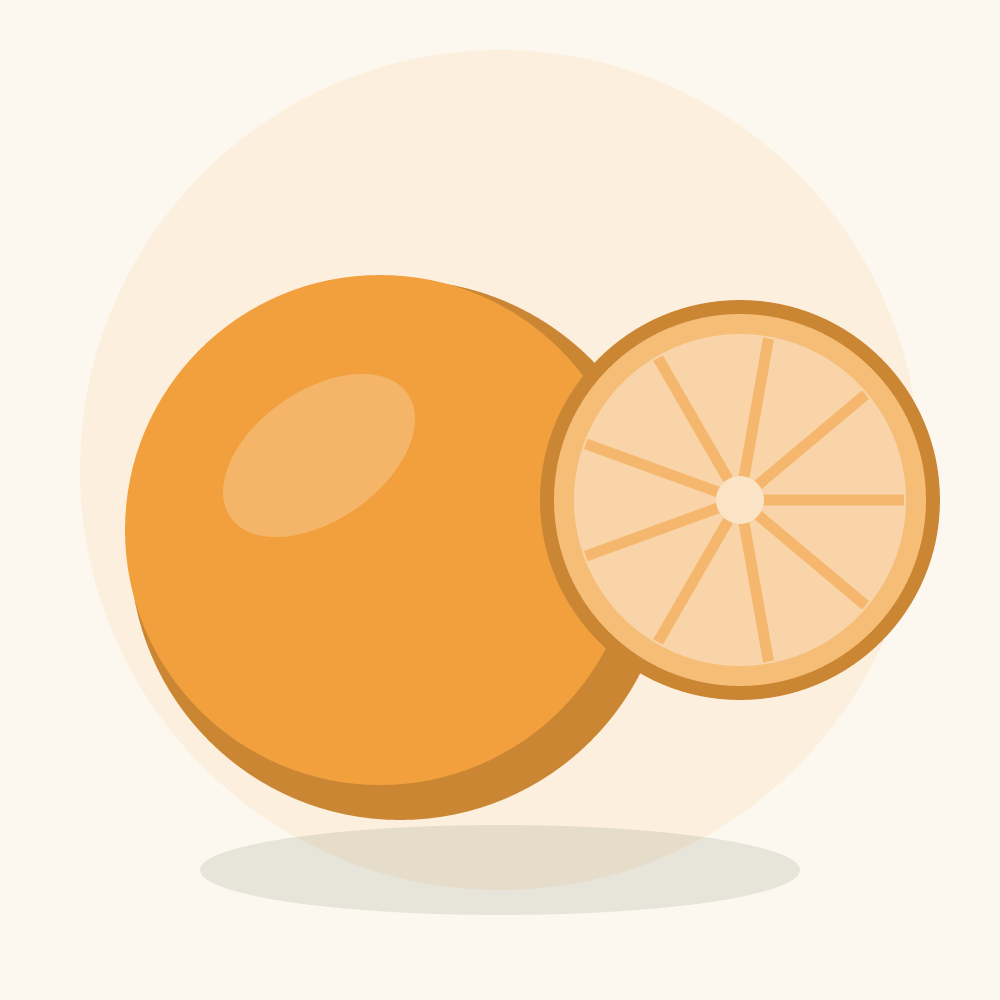
Orange illustration

Orange

The world's benchmark citrus — an ancient pomelo-mandarin hybrid whose name became a color and whose vitamin C reputation launched a juice industry. Navels for eating, Valencias for squeezing.

Papaya illustration

Papaya

A soft, sunset-orange melon-like fruit that grows like a palm-tree lantern — gentle, musky sweetness, legendary digestive enzymes, and a green unripe stage that's a vegetable in its own right.

Pawpaw illustration

Pawpaw

North America's largest native fruit — a temperate cousin of the cherimoya with soft, tropical-tasting custard flesh of banana, mango, and vanilla, almost never sold because it bruises in a day.

Peach illustration

Peach

Summer's velvet icon — a Chinese stone fruit of immortality myths, perfected into juice-down-your-arm ripeness. White peaches run floral and sweet; yellow ones balance sugar with a wine-like tang.

Pear illustration

Pear

The apple's silkier cousin — buttery, perfumed flesh that ripens from the inside out and rewards patience like few other fruits. Asian pears add a crisp, juicy alternate personality.

Pepino illustration

Pepino

A mild, mellow Andean fruit that looks like a purple-streaked golden egg and tastes like a cross between honeydew and cucumber — refreshing, low-sugar, and eaten like a melon.

Pequi illustration

Pequi

The golden, funky heart of Brazil's Cerrado — an oily fruit you must nibble with care, because under its buttery flesh waits a disc of hidden spines. Loved to the point of festivals in Goiás and Minas, baffling to everyone else.

Persimmon illustration

Persimmon

Autumn's lantern — a glowing orange fruit with two personalities: crisp, sweet Fuyu eaten like an apple, and Hachiya, an astringency bomb that transforms into apricot-honey custard when fully soft.

Phalsa illustration

Phalsa

Tiny purple berries sold by the paper cone in the fiercest weeks of the South Asian summer — sweet-sour, cooling, and gone in a blink. Phalsa season is short, scorching, and adored from Karachi to Varanasi.

Plantain illustration

Plantain

The banana that went savory — bigger, starchier, and thicker-skinned, treated as a vegetable from Lagos to San Juan to Manila. Green it's a potato; black it's dessert; every stage in between has a recipe.

Plum illustration

Plum

The most varied stone fruit — from candy-sweet Japanese hybrids to honeyed greengages to tart damsons — plus a second life as the prune, the fruit world's most rehabilitated dried good.

Pomegranate illustration

Pomegranate

The jewel box of fruits — a leathery red vault packed with hundreds of ruby arils, each a burst of sweet-tart juice around a crunchy seed. Persia's ancient symbol of abundance, now a superfood-aisle fixture.

Pomelo illustration

Pomelo

The largest citrus on earth and the wild ancestor of the grapefruit — thick-armored, gently sweet, and never bitter, with firm juice vesicles that snap like citrus caviar.

Quandong illustration

Quandong

The scarlet "desert peach" of the Australian outback — a glowing red drupe on a half-parasitic sandalwood cousin, tart as dried apricot and treasured by Aboriginal peoples for millennia. Its pitted stone is as famous as its flesh.

Quince illustration

Quince

The golden, perfumed ancestor of marmalade — rock-hard and astringent raw, but cooked it turns rose-pink, silky, and intensely aromatic. The most transformative fruit in the kitchen.

Rambai illustration

Rambai

Velvety tan fruit hanging in long strings straight from the trunk — a Malaysian and Bornean village favorite with translucent, sweet-sour segments like a softer, wilder lanzones. Rarely farmed at scale, mostly shared over fences.

Raspberry illustration

Raspberry

The most perfumed berry — a hollow crown of drupelets with huge flavor, huge fiber, remarkably little sugar, and a shelf life measured in hours. Eat them the day you meet them.

Redcurrant illustration

Redcurrant

Translucent ruby beads on delicate strings — tart, jewel-bright berries that shine in jellies, sauces, and as the classic garnish frosted with sugar.

Riberry illustration

Riberry

Pink, pear-shaped mini-fruit from an Australian rainforest lilly pilly, tasting of cranberry warmed with clove and cinnamon. A street-tree berry hiding in plain sight that became one of the native-food movement's most useful ingredients.

Safou illustration

Safou

Central Africa's "butterfruit" — a glossy indigo fruit that roasts into something like warm, tangy avocado butter. Eaten with grilled corn on a million street corners, it's a savory fruit that behaves like a vegetable and nourishes like a meal.

Salak illustration

Salak

The snake fruit — a fig-sized teardrop wrapped in genuine reptile-pattern scales, hiding crisp ivory lobes that taste of pineapple, pear, and something fermented-honeyed. Indonesia's spikiest handshake.

Santol illustration

Santol

The cotton fruit — a golden tennis ball whose sour rind hides sweet, cottony white segments you suck rather than chew. A Filipino and Thai backyard classic with a serious don't-swallow-the-seed rule.

Saskatoon berry illustration

Saskatoon berry

The purple berry the Canadian prairies are literally named after — Saskatoon the city took its name from the Cree misâskwatômina. Blueberry-lookalike with a sweet almond soul, it powered pemmican for centuries and pies ever since.

Sea buckthorn illustration

Sea buckthorn

Vivid orange berries that cling in dense clusters to thorny coastal and mountain shrubs — bracingly sour, wildly nutritious, and rich in a rare fruit oil used for skin and health.

Sineguelas illustration

Sineguelas

Small plum-like tropical fruits eaten by the handful — thin skin over sweet-tart yellow flesh clinging to a big pit, a beloved Philippine and Latin American summer snack.

Soursop illustration

Soursop

The tropics' creamiest sour fruit — a spiky green giant whose white pulp tastes like strawberry-pineapple custard with citrus lightning. The soul of Latin sorbets and Filipino juice stands alike.

Star apple illustration

Star apple

Cut this glossy purple globe crosswise and a translucent star appears — hence the name. Its milky, sweet flesh made it a beloved dooryard fruit from the Caribbean to the Philippines, where merienda under a kaimito tree is childhood itself.

Starfruit illustration

Starfruit

The fruit that slices into stars — waxy golden ridges, crisp grape-citrus flesh, and zero prep beyond a knife. A garnish celebrity that's genuinely good eating, with one serious kidney-health caveat.

Strawberry illustration

Strawberry

The world's favorite berry — a rose-family hybrid whose seeds sit on the outside, whose peak-season perfume defines "fruity," and whose highland farms bring temperate sweetness to the tropics.

Sudachi illustration

Sudachi

Tokushima's golf-ball citrus, picked hard and green and squeezed over almost everything. Sharper and more herbal than lime, it's the taste of Japanese autumn — grilled fish, matsutake mushrooms, and soba all wait for it.

Sugar-apple illustration

Sugar-apple

The knobby little custard grenade — scaly segments that pull apart into spoonfuls of perfumed, pear-custard sweetness around slick black seeds. The Philippines' beloved atis, best eaten with your hands.

Surinam cherry illustration

Surinam cherry

A ribbed, pumpkin-shaped little fruit that ripens from green through orange to deep crimson-black — sweet-tart and resinous, the beloved pitanga of Brazilian backyards.

Tamarillo illustration

Tamarillo

An egg-shaped, jewel-toned relative of the tomato — tangy, savoury-sweet flesh with an edible skin best peeled, eaten spooned from the shell or cooked into chutneys across the Andes and New Zealand.

Tamarind illustration

Tamarind

The sour engine of half the world's cuisines — a legume pod whose sticky brown pulp powers sinigang, pad thai, agua de tamarindo, Worcestershire sauce, and chutneys across four continents.

Tangelo illustration

Tangelo

A juicy citrus hybrid of tangerine and grapefruit (or pomelo) — loose-skinned and easy to peel like a mandarin, but bigger, tarter, and gushing with juice, often with a distinctive "bell" neck.

Tejocote illustration

Tejocote

The little golden hawthorn of the Mexican highlands, essential to Christmas — no ponche navideño is legal without it. Crab-apple tart and aromatic, it simmers into the holiday and candies into rielitos the rest of the year.

Tomato illustration

Tomato

Botanically a fruit, legally a vegetable (US Supreme Court, 1893), culturally indispensable — the Andean berry that conquered every cuisine on earth and became the world's most-grown "vegetable."

Ugni illustration

Ugni

A tiny maroon berry with an outsized aroma — sweet-tart and perfumed with strawberry, guava, and bubblegum — foraged in Chile and famous as Queen Victoria's reputed favourite fruit.

Umbu illustration

Umbu

The "sacred tree of the backlands" bears this lime-green, juicy-tart fruit through the droughts of Brazil's caatinga — thanks to water-storing roots. Umbu means "the one that gives drink," and the milkshake-like umbuzada proves it daily.

Ume illustration

Ume

Japan's green "plum" that is botanically closer to an apricot — and almost never eaten raw. Salted into umeboshi, steeped into umeshu, or simmered into syrup, ume turns mouth-puckering acidity into some of Asia's most beloved preserved flavors.

Wampee illustration

Wampee

A citrus-family curiosity from southern China that grows like grapes and peels like a loquat — brittle tan skin, translucent flesh, and a flavor between grapefruit, longan, and lemonade. Beloved in Guangdong, nearly unknown outside Asia.

Watermelon illustration

Watermelon

Summer in fruit form — 92% water wrapped in a green rind, descended from the Kalahari Desert and perfected over 4,000 years into the world's juiciest thirst-quencher.

Wood apple illustration

Wood apple

A cannonball of a fruit from India and Sri Lanka — a grey, wood-hard shell you crack like a coconut, hiding brown, tamarind-ish pulp that smells fermented and tastes like sour caramel raisins. The base of one of South Asia's great market drinks.

Yangmei illustration

Yangmei

China's knobbly crimson summer berry — a fruit of a thousand juice-filled beads around a single pit, tasting of strawberry, cranberry, and pine. So perishable it barely leaves the region where it fell, which is exactly why it inspires June pilgrimages.

Yuzu illustration

Yuzu

East Asia's aromatic winter citrus — a knobbly, seed-heavy fruit prized not for eating but for a rind and juice whose perfume outclasses lemon, lime, and mandarin combined.