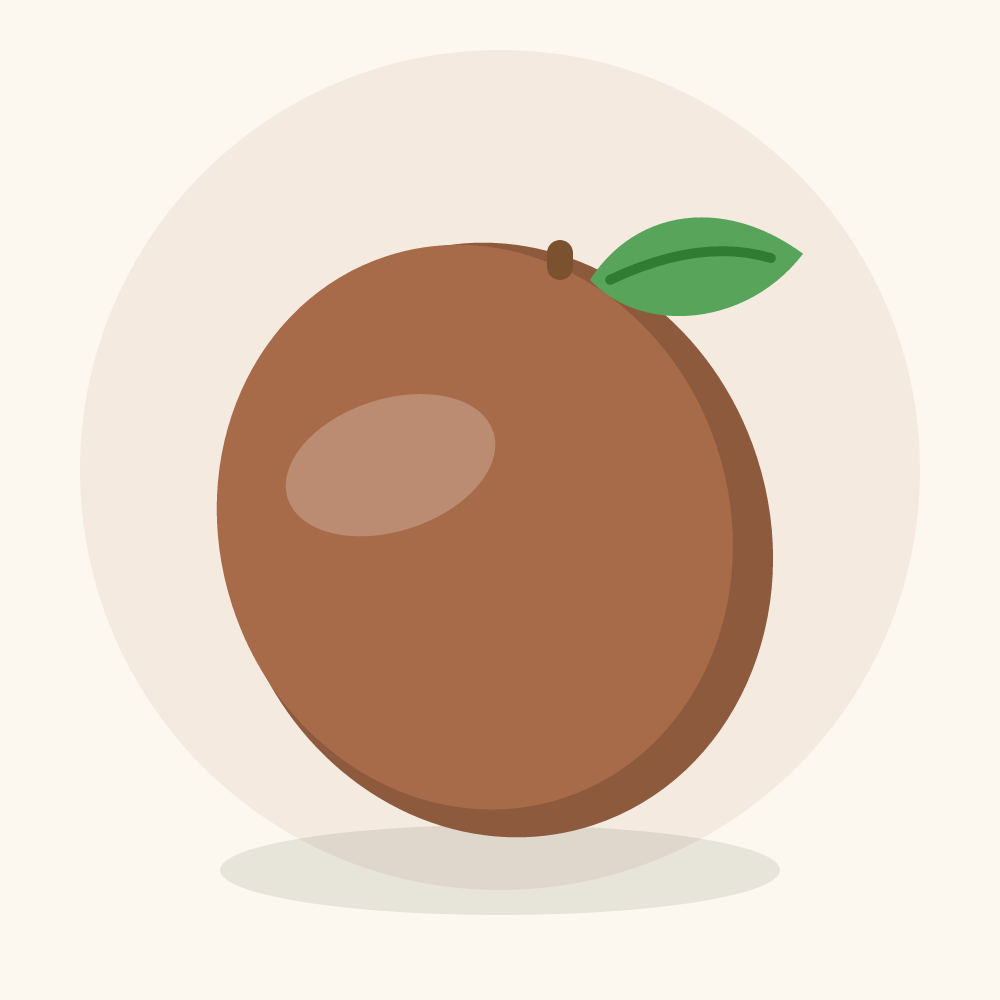
Sapodilla
Manilkara zapota · Sapotaceae · also known as Chikoo, Chiku, Sapota, Níspero (Caribbean), Chicozapote, Chico, Naseberry, Sawo, Dilly
The brown-sugar fruit — dusty tan skin over caramel flesh that tastes like a pear baked in molasses. Also the tree that gave the world chewing gum, before synthetics took the job.

At a glance
- Taste
- Malty, honeyed sweetness — brown sugar, baked pear, and a whisper of root beer — with soft, slightly granular flesh like an overripe pear. Underripe fruit is chalky-tannic and unpleasant; patience is mandatory.
- Origin
- Southern Mexico, Belize, and Guatemala; the Maya tapped it long before orchards
- Grown in
- Mexico, India, Philippines, Thailand, Guatemala, Vietnam
- Peak season
- Summer, Winter, Year-round
- Notable varieties
- Ponderosa (Philippines), Kalipatti (India), Alano, Makok (Thailand)
Sensory & practical profile
Taste fingerprint
- Sweetness
- Tartness
- Aroma
- Juiciness
- Firmness
Approximate, at peak ripeness · 0–5
- Ripe when
- Scratch the skin — yellow-tan underneath means ripening, green means chalky-astringent; ripe fruit smells malty.
- How to eat
- Chill, halve, spoon out the brown-sugar flesh, and remove the few glossy black seeds.
- Typical price
- Everyday
Its latex is chicle, the original chewing gum — the Nahuatl "tzictli" gave us the brand name Chiclets.
How to select & store
Picking a ripe one
Scratch the skin lightly: yellow-tan underneath means ripening, green means put it back. Ripe chico yields like a ripe kiwi and smells of malt and honey. Avoid fruit weeping sap — picked too green.
Storing it
Ripen on the counter (a few days), then refrigerate briefly. Fully ripe chico is soft, fragrant, and won't wait — the eating window is short and worth guarding.
Practical uses
🍽️ Culinary
- Chilled, halved, and spooned — remove the few glossy black seeds
- Chikoo milkshakes (a beloved Indian classic) and Filipino chico shakes
- Ice creams and halo-halo enrichment
- Compotes and quick breads where its brown-sugar depth replaces some sweetener
🌿 Health & traditional
- Traditional tannin-rich unripe fruit and bark used for digestive complaints in folk systems
🎎 Cultural
- Chicle — the sap of this tree — was the original chewing gum base: the Aztec word "tzictli" became "Chiclets"
- A Filipino and Indian childhood fruit; Mexican chicleros tapped wild forests for the gum trade for a century
Eating sapodilla: what to know
What regular consumption looks like
Sapodilla is a nutritious everyday fruit, best enjoyed as part of a varied diet. It is a good source of fibre (about 5.3 g per 100 g), which supports digestion and satiety. Its pigments and polyphenols are antioxidants that population studies associate with heart health, though that reflects overall diet rather than any single fruit.
Sensible amounts
A typical fruit serving is roughly a handful, one medium fruit, or about 80 g, and two or more varied fruit servings a day is a sensible everyday pattern.
Evidence & conditions
As a whole fruit, Sapodilla contributes fibre, vitamins, and beneficial plant compounds, but it has not been shown to treat or prevent any specific condition — so it is best enjoyed as part of a healthy diet rather than as a remedy.
Sapodilla: frequently asked questions
What does sapodilla taste like?
Malty, honeyed sweetness — brown sugar, baked pear, and a whisper of root beer — with soft, slightly granular flesh like an overripe pear. Underripe fruit is chalky-tannic and unpleasant; patience is mandatory.
When is sapodilla in season?
Sapodilla is available year-round in the regions where it grows.
How do you eat sapodilla?
Chill, halve, spoon out the brown-sugar flesh, and remove the few glossy black seeds.
How do you know when sapodilla is ripe?
Scratch the skin — yellow-tan underneath means ripening, green means chalky-astringent; ripe fruit smells malty.
Is sapodilla good for you?
Sapodilla is a nutritious everyday fruit, best enjoyed as part of a varied diet. It is a good source of fibre (about 5.3 g per 100 g), which supports digestion and satiety. Its pigments and polyphenols are antioxidants that population studies associate with heart health, though that reflects overall diet rather than any single fruit.
How much sapodilla should you eat?
A typical fruit serving is roughly a handful, one medium fruit, or about 80 g, and two or more varied fruit servings a day is a sensible everyday pattern.
What else is sapodilla called?
It travels under a lot of names: chikoo, chiku or sapota across India and Pakistan; níspero in much of the Spanish-speaking Caribbean and Central America; chicozapote and chicle in Mexico; naseberry in Jamaica; sawo in Indonesia; and dilly in parts of the Caribbean. All are Manilkara zapota.
Is a níspero a sapodilla or a loquat?
Both, which is exactly the confusion. In Spain and much of the Spanish-speaking Mediterranean, níspero means loquat (Eriobotrya japonica) — a small orange spring fruit. In Cuba, the Dominican Republic, Venezuela and parts of Central America, níspero means sapodilla. If a recipe calls for níspero, the region tells you which fruit it wants.
Why must sapodilla be fully ripe?
Unripe sapodilla is heavy in latex and tannins — chalky, mouth-drying and genuinely unpleasant. That latex is chicle, the sap that was the original base of chewing gum before synthetic polymers replaced it. Scratch the skin: yellow-tan underneath means it is ripening, green means wait. Ripe fruit smells malty and gives like a ripe pear.
Before it was a fruit in your bowl, this tree ran an industry: its milky latex is chicle, the original chewing gum. Maya and Aztec chewers had it first (tzictli), Mexican chicleros tapped rainforest trees for the Wrigley era, and the brand name Chiclets still carries the Nahuatl word. Synthetic gum bases ended the trade in the 1950s; the fruit kept the fans.
Brown sugar on a tree
Ripe chico is the closest nature comes to pre-caramelized fruit — malt, molasses, and baked pear, with a texture like custard that kept a little grain. That’s also why the underripe fruit is so treacherous: the same tannins that read as “depth” at ripeness read as chalk and sandpaper a week early. The scratch test (yellow under the skin) protects you.
Milkshake royalty
India figured out the fruit’s best trick: the chikoo shake, where its caramel flavor does to milk what chocolate does. The Philippines runs the same play in shakes and halo-halo. Anywhere banana works in a blender, chico works deeper.
If you like sapodilla, try these