Spring fruits

55 fruits

Fruits that peak as the dry season builds — including the start of mango season in Southeast Asia.
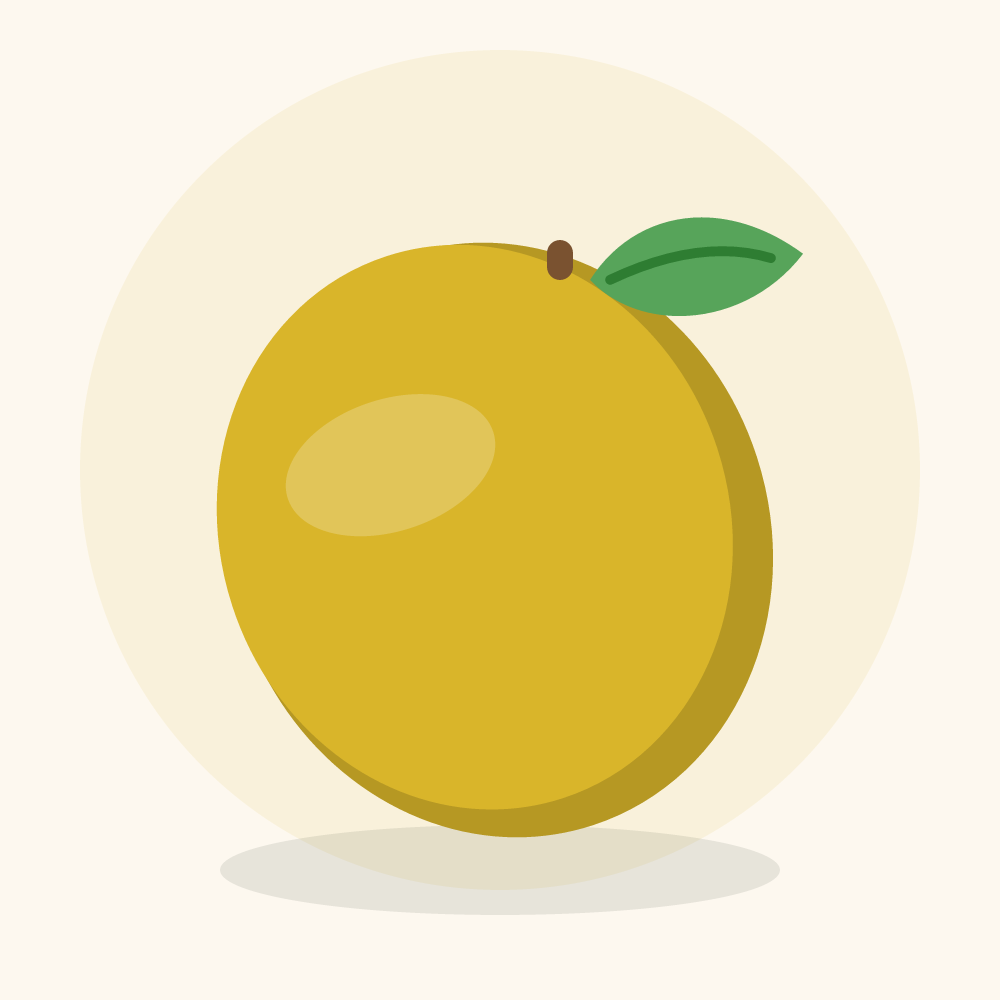
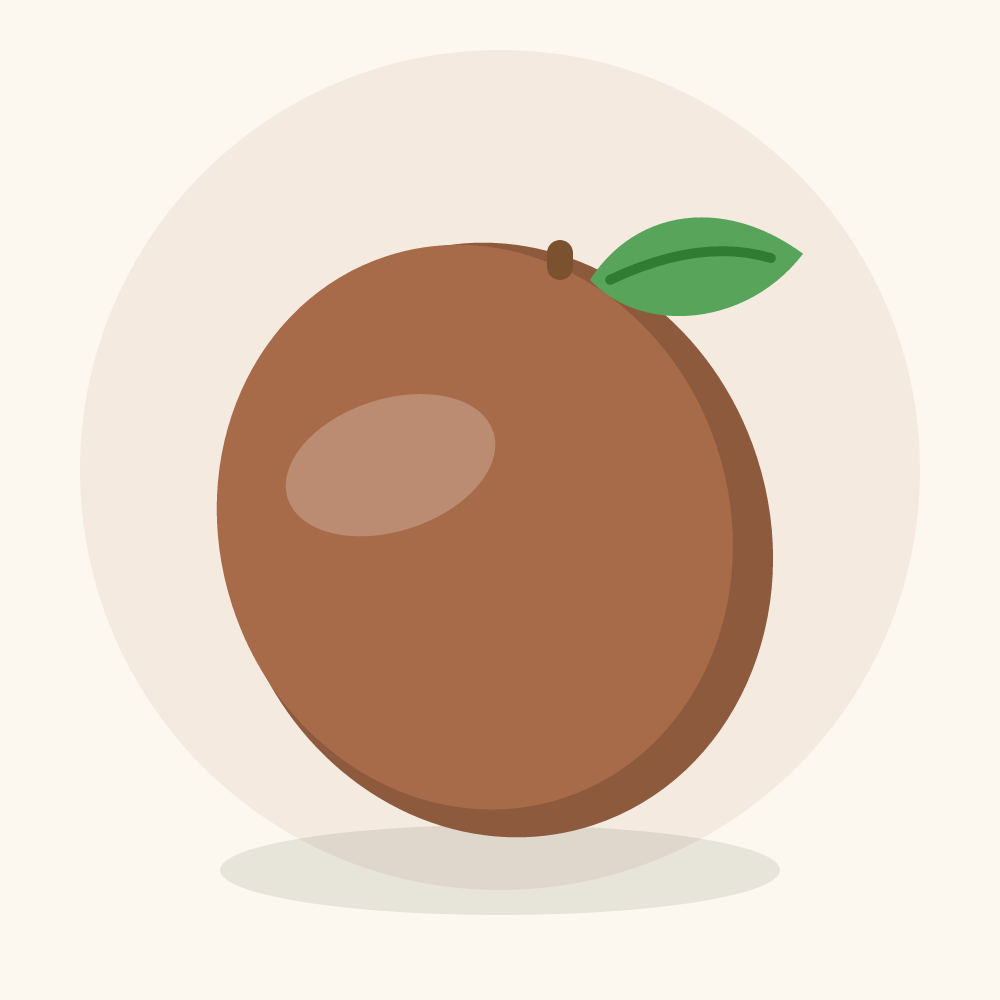
African black plum illustration

African black plum

A sweet, blue-black African fruit from a savanna tree — soft, date-like flesh tasting of prune and chocolate, eaten fresh, dried, and cooked into a molasses-like sweetener. A valued wild food and medicine across West and Central Africa.

African locust bean illustration

African locust bean

A West African tree whose long pods hold two treasures — a sweet, yellow, powdery pulp eaten fresh or in drinks, and seeds fermented into dawadawa, the pungent, protein-rich condiment that seasons much of West African cooking.

Two whole apricots and one halved showing the stone
Photo: MatthiasKabel · CC BY-SA 3.0 / Wikimedia Commons

Apricot

The golden miniature of the stone-fruit family — musky, honeyed, and tragically fragile fresh, which is why the world knows it best dried. Central Asia's ancient orchard treasure.

A mature velvety baobab pod (Adansonia digitata) with its woody stem, on white
Photo: Neelix · Public domain / Wikimedia Commons

Baobab

The upside-down tree's velvet pod holds a fruit that dries itself — naturally powdery, sherbet-tart pulp that Africa has stirred into drinks for centuries and food science calls one of the most nutrient-dense fruits measured.

Two ripe yellow-green ber (Indian jujube, Ziziphus mauritiana) fruits
Photo: Sridhar Rao · CC BY-SA 4.0 / Wikimedia Commons

Ber

The Indian jujube — a small, crisp, apple-like fruit that ripens through the hot dry season across South Asia and Africa, eaten fresh with salt and chili, dried, or candied. A hardy desert tree fruit beloved from India to the Sahel.

Bullock's heart illustration

Bullock's heart

The heart-shaped, red-blushed member of the custard-apple clan — smooth-skinned and netted, with soft, creamy, mildly sweet flesh. Less perfumed than its cousins but widely grown from India to the Caribbean as an easygoing dooryard dessert.

A ripe red cashew apple with its grey cashew nut hanging on the tree
Photo: Wilfredor · CC0 / Wikimedia Commons

Cashew apple

The juicy, bell-shaped "fruit" the cashew nut dangles beneath — technically a swollen stem, gloriously fragrant, and so fragile that most of the world's crop is drunk within miles of the tree. Brazil turns it into juice; Goa distills it into feni.

Two glossy red sweet cherries joined at the stem
Photo: spurekar · CC BY 2.0 / Wikimedia Commons

Cherry

The fleeting jewel of early summer — glossy, snappy, and gone in weeks. Sweet cherries for the bowl, sour cherries for the pie, and a blossom season that stops whole nations to look up.

A scatter of small pale chironji kernels on a white plate beside a coin for scale
Photo: Badagnani · CC BY-SA 3.0 / Wikimedia Commons

Chironji

The tiny lens-shaped kernel prised from a small forest drupe — India's answer to the almond, scattered through kheer, barfi and festival sweets, and gathered almost entirely from wild trees by forest communities.

Dekopon illustration

Dekopon

The mandarin with a topknot — a 1972 Japanese cross that took nearly twenty years to reach market, and now sells under three different trademarked names on three continents while being one single cultivar.

Desert date illustration

Desert date

A tough, thorny tree of the Sahel and dry Africa bearing bittersweet date-like fruit — a drought-defying famine food eaten across the arid belt, with edible oil in its seed and soap-like saponins throughout. A true survival plant.

A small round yellow-green desert lime (Citrus glauca) hanging among the narrow foliage
Photo: Mark Marathon · CC BY-SA 3.0 / Wikimedia Commons

Desert lime

A tiny, tough, thornbush citrus from Australia's dry interior — pea-sized green limes with a sharp, sweet-edged flavor, eaten whole and used as one of the hardiest true citrus in the world for marmalade, drinks, and native cooking.

Dewberry illustration

Dewberry

A trailing, ground-hugging cousin of the blackberry that ripens weeks earlier — soft, dark, dusty-blue berries gathered along fences and roadsides, especially across the American South where dewberry cobbler marks the start of berry season.

Gingerbread plum illustration

Gingerbread plum

A hardy Sahelian fruit tree of West Africa's dry sands — its orange, plum-like fruit has mealy sweetish flesh, while the large seed hides an oil-rich edible kernel used like an almond. A dependable dry-season food where little else fruits.

Ripe red oblong goumi berries (Elaeagnus multiflora) hanging among the leaves
Photo: Krzysztof Ziarnek, Kenraiz · CC BY-SA 4.0 / Wikimedia Commons

Goumi

A speckled scarlet berry from a hardy, nitrogen-fixing East Asian shrub — astringent until dead-ripe, then sweet-tart and tomato-bright, rich in lycopene. A forager's and permaculturist's favorite that improves the soil while it feeds you.

A whole grapefruit, a halved one with pink flesh, and a segment
Photo: Ivar Leidus · CC BY-SA 4.0 / Wikimedia Commons

Grapefruit

An 18th-century Caribbean accident — pomelo crossed with sweet orange — that became breakfast's most polarizing citrus: bitter, bracing, and beloved once your palate grows into it.

Green sapote illustration

Green sapote

A Central American cousin of the mamey sapote with thinner, olive-green skin and sweet, russet-red flesh tasting of pumpkin, caramel, and sweet potato. A prized but uncommon highland fruit of Guatemala and Honduras.

Ripe dark purple grumichama (Eugenia brasiliensis) fruit on the tree
Photo: Forest and Kim Starr · CC BY 3.0 US / Wikimedia Commons

Grumichama

Brazil's answer to the cherry — a glossy purple-black fruit from the Atlantic rainforest that tastes like sweet cherry with a whisper of clove. Beloved in backyards from Bahia to São Paulo, almost unknown beyond them.

Ripe elongated blue haskap berries (Lonicera caerulea) on the bush
Photo: Hansicanada · CC BY-SA 4.0 / Wikimedia Commons

Haskap

An edible honeysuckle with oblong indigo berries that beat strawberries to the punch — the first fruit of the northern year. Ainu heritage in Hokkaido, Siberian hardiness, Canadian breeding: a berry built for the cold with a raspberry-blueberry heart.

Iyokan illustration

Iyokan

Japan's second-most-grown citrus and almost unknown outside it — a thick-skinned, strongly aromatic winter orange from Ehime Prefecture, sweeter than it smells and named after a province that no longer exists.

Halved jabuticaba fruits showing translucent white pulp and dark purple skin
Photo: Mk2010 · CC BY-SA 4.0 / Wikimedia Commons

Jabuticaba

The tree that fruits on its own trunk — grape-like black berries that erupt straight from the bark, with sweet translucent flesh and a thick, tannic, wine-toned skin.

Jackalberry illustration

Jackalberry

The sweet yellow fruit of a giant African savanna tree — a wild persimmon relative loved by jackals, elephants, and people alike, eaten fresh, dried, or brewed into beer across the continent's bushveld.

A steel tray of ripe crimson kaphal berries with a measuring glass, sold at a Himalayan roadside
Photo: P. Jeganathan · CC BY-SA 4.0 / Wikimedia Commons

Kaphal

The Himalayan hill fruit that appears for a few weeks each spring and never reaches a shop — small crimson berries sold in paper cones on mountain roadsides from Uttarakhand to Nepal, sweet-sour and gone within days.

A whole fuzzy brown kiwifruit and two halves showing green flesh and black seeds
Photo: André Karwath · CC BY-SA 2.5 / Wikimedia Commons

Kiwi

A Chinese vine fruit rebranded by New Zealand into a global icon — emerald flesh, edible black seeds, dessert-bright acidity, and more vitamin C than an orange, gram for gram.

Three ripe orange loquats
Photo: Dinkun Chen · CC BY-SA 4.0 / Wikimedia Commons

Loquat

Spring''s first stone fruit impostor — an apricot-colored pome (apple family!) with juicy, floral sweet-tart flesh and big glossy seeds. A backyard giveaway across the subtropics, a cough-syrup icon in China.

Two whole lucuma fruits with russet-green skin
Photo: Dtarazona · Public domain / Wikimedia Commons

Lúcuma

Peru's beloved golden fruit — dry, dense flesh tasting of maple, sweet potato, and butterscotch. Almost never eaten out of hand, it is the country's favorite ice-cream flavor and has been painted on pottery for 2,000 years.

Mahua illustration

Mahua

The tree whose flowers are the crop — thick, fleshy, intensely sweet corollas that drop at dawn and are gathered by the sackful across central India, eaten, dried, and distilled into the spirit that carries the tree's name.

Mangaba illustration

Mangaba

The soft, fragrant fruit of a rubber-producing cerrado tree — sweet-tart and creamy when dead-ripe, milky and mouth-gripping if picked too soon. Northeast Brazil turns it into ice cream and juice, and the name itself means "good thing to eat."

A whole ripe mango beside a halved one showing deep-orange flesh
Photo: Ivar Leidus · CC BY-SA 4.0 / Wikimedia Commons

Mango

The world's most beloved tropical stone fruit — honey-sweet golden flesh with floral, resinous notes. The Philippine Carabao variety is prized as one of the sweetest on earth.

Manila tamarind illustration

Manila tamarind

Not a true tamarind but a curly, coiled pod hiding sweet-and-sour pink or white pulp around shiny black seeds. A hardy street and dryland tree from Mexico to the Philippines, its pods a cherished childhood snack.

Mayhaw illustration

Mayhaw

A small red hawthorn from the swamps of the American Deep South, ripening in May when little else does — too tart to eat raw, but the source of a pale, ruby jelly so prized it has its own festivals across Louisiana, Texas, and Georgia.

Ripe yellow Meyer lemon hanging on the tree
Photo: Jrienstra · CC BY-SA 3.0 / Wikimedia Commons

Meyer lemon

A lemon-mandarin hybrid with thin, fragrant skin and low-acid, faintly sweet juice — rounder and more floral than a grocery lemon. A backyard and chef's darling that bruises too easily to ship far.

Mobola plum illustration

Mobola plum

A yellow-brown, plum-sized African fruit with mealy, sweet-sour flesh tasting of dried apricot and pear — a valued wild savanna food across southern and central Africa, eaten fresh, dried, and brewed into a traditional beer.

Mulberries at different ripeness stages, from red to dark purple, on the branch
Photo: Miloslav Bahna · CC BY-SA 4.0 / Wikimedia Commons

Mulberry

The silk tree's secret dessert — blackberry-lookalike fruit that stains fingers purple and never reaches supermarkets because it dissolves in transit. A backyard and market-stall treasure worldwide.

Natsumikan illustration

Natsumikan

The Japanese citrus that has to be left on the tree through winter and picked in summer, because it is too sour to eat when it looks ripe. A thick-skinned, sharply refreshing fruit that taught a whole region patience.

A whole orange, a cut half, and a peeled segment
Photo: Ivar Leidus · CC BY-SA 4.0 / Wikimedia Commons

Orange

The world's benchmark citrus — an ancient pomelo-mandarin hybrid whose name became a color and whose vitamin C reputation launched a juice industry. Navels for eating, Valencias for squeezing.

Pale-yellow ribbed Otaheite gooseberry, whole and in cross section showing the star-shaped stone
Photo: Salil Kumar Mukherjee · CC BY-SA 4.0 / Wikimedia Commons

Otaheite gooseberry

Pale ribbed fruit that dangles in grape-like ropes straight from the branch, sharp enough to make lemons nervous. A tropical dooryard tree from India to the Caribbean, grown for pickles, candy, and blush-pink syrups rather than fresh eating.

A single ripe glossy red quandong (Santalum acuminatum) hanging among narrow grey-green leaves
Photo: John Moss · Public domain / Wikimedia Commons

Quandong

The scarlet "desert peach" of the Australian outback — a glowing red drupe on a half-parasitic sandalwood cousin, tart as dried apricot and treasured by Aboriginal peoples for millennia. Its pitted stone is as famous as its flesh.

Rio Grande cherry illustration

Rio Grande cherry

A dark red-to-purple Brazilian cherry from the Atlantic forest — glossy, juicy, and sweet with a slight tang, ripening fast in late spring. A cherished southern-Brazilian native, less known than the pitanga but rated by many as the finest of the Eugenia cherries.

A single ripe red salmonberry hanging from a branch
Photo: Gordon Leggett · CC BY-SA 4.0 / Wikimedia Commons

Salmonberry

A glowing orange-to-red bramble berry of the Pacific Northwest rainforest — one of the first fruits of spring, gathered for millennia by coastal First Nations who ate its berries and young shoots alike.

Sansapote illustration

Sansapote

A large, rough-skinned Central American fruit with sweet, deep-orange, fibrous flesh tasting of pumpkin and sweet potato. A humble backyard sapote of Mexico and the isthmus, eaten fresh off the tree and beloved by children and monkeys alike.

A round green star apple on the tree among its bicolored leaves
Photo: Rison Thumboor · CC BY-SA 4.0 / Wikimedia Commons

Star apple

Cut this glossy purple globe crosswise and a translucent star appears — hence the name. Its milky, sweet flesh made it a beloved dooryard fruit from the Caribbean to the Philippines, where merienda under a kaimito tree is childhood itself.

A single ripe garden strawberry with its green calyx
Photo: Ivar Leidus · CC BY-SA 4.0 / Wikimedia Commons

Strawberry

The world's favorite berry — a rose-family hybrid whose seeds sit on the outside, whose peak-season perfume defines "fruity," and whose highland farms bring temperate sweetness to the tropics.

A ripe red ribbed Surinam cherry (Eugenia uniflora) hanging on the bush
Photo: B. Navez · CC BY-SA 3.0 / Wikimedia Commons

Surinam cherry

A ribbed, pumpkin-shaped little fruit that ripens from green through orange to deep crimson-black — sweet-tart and resinous, the beloved pitanga of Brazilian backyards.

A stacked pile of ripe green-and-yellow sweet limes (Citrus limetta) at a market
Photo: Thamizhpparithi Maari · CC BY-SA 4.0 / Wikimedia Commons

Sweet lime

A pale-green citrus that looks like a lime but tastes barely sour — a mild, sweetish, low-acid juice fruit that fuels roadside juice stalls across India as mosambi, and grows around the Mediterranean as limetta.

Ume illustration

Ume

Japan's green "plum" that is botanically closer to an apricot — and almost never eaten raw. Salted into umeboshi, steeped into umeshu, or simmered into syrup, ume turns mouth-puckering acidity into some of Asia's most beloved preserved flavors.

Uvaia illustration

Uvaia

A soft, juicy, pear-shaped yellow fruit of Brazil's Atlantic forest — intensely aromatic and sweet-tart, so thin-skinned and delicate it bruises in the hand, making it a backyard treasure rarely sold in shops.

Combine with more filters →