Doum palm fruit
Hyphaene thebaica · Arecaceae · also known as Gingerbread palm, Doum, Dom, Egyptian doum
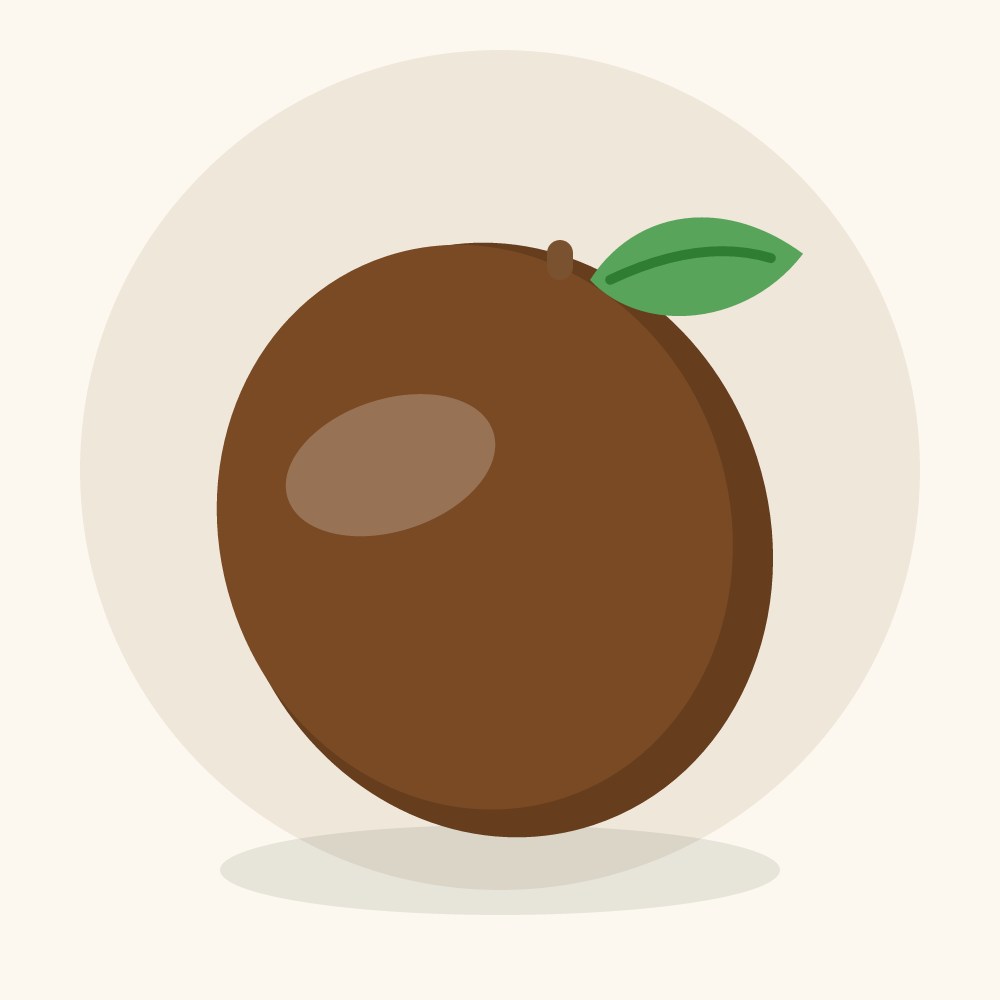
The hard, shiny, reddish-brown fruit of the gingerbread palm — its dry fibrous rind tasting genuinely of gingerbread. An ancient food of the Nile and Sahel, soaked into a cooling drink and used as medicine, found even in the tomb of Tutankhamun.
At a glance
- Taste
- Dry, fibrous, and mealy with a distinct gingerbread, ginger-and-molasses flavor; the tough rind is nibbled or ground, and soaking releases a sweet, spicy, caramel-toned drink.
- Origin
- The Nile valley, the Sahel, and the Horn of Africa
- Grown in
- Egypt, Sudan, Nigeria, Kenya, Chad
- Peak season
- Autumn, Winter
Sensory & practical profile
Taste fingerprint
- Sweetness
- Tartness
- Aroma
- Juiciness
- Firmness
Approximate, at peak ripeness · 0–5
- Ripe when
- The fruit hardens and turns glossy reddish-brown — it's used dry and mature, not soft; ripeness means fully colored and shelf-stable.
- How to eat
- Nibble the gingerbread-flavored rind, or (better) soak or boil it into doum juice; grind it to powder for drinks and sweets.
- Typical price
- Budget
Baskets of doum-palm fruit were placed in the tomb of Tutankhamun over 3,000 years ago — the same fruit that Egyptians still soak into a cooling gingerbread-flavored drink today.
When it's in season, by region
| Region | Peak months |
|---|---|
| Africa | Harvested dry; available much of the year across the Nile and Sahel |
How to select & store
Picking a ripe one
Choose hard, glossy reddish-brown fruit that feels heavy and smells faintly of gingerbread; the fruit is used dry and hard, so softness is not the aim. Sold whole or ground as powder.
Storing it
The hard, dry fruit keeps for months to years at room temperature — one of the most shelf-stable fruits there is. Powder keeps well sealed.
Practical uses
🍽️ Culinary
- Doum juice — the rind soaked or boiled into a cooling, gingerbread-flavored drink (popular in Egypt and Sudan)
- Ground into powder for drinks, sweets, and porridge
- Nibbled dry as a chewy snack
- The seed's kernel eaten like a vegetable ivory nut when young
🌿 Health & traditional
- Traditionally used for blood pressure and as a general tonic; a subject of modern study
🎎 Cultural
- Sacred in ancient Egypt, associated with the god Thoth; baskets of doum fruit were placed in Tutankhamun's tomb
- A staple dry-land food and drink across the Nile and Sahel for millennia
Eating doum palm fruit: what to know
What regular consumption looks like
Doum palm fruit is a nutritious everyday fruit, best enjoyed as part of a varied diet. It is high in fibre (about 20 g per 100 g), which supports healthy digestion and regularity and helps you feel full. It supplies useful potassium (about 800 mg per 100 g), a mineral linked with healthy blood pressure as part of a balanced diet. Its pigments and polyphenols are antioxidants that population studies associate with heart health, though that reflects overall diet rather than any single fruit.
Sensible amounts
A typical fruit serving is roughly a handful, one medium fruit, or about 80 g, and two or more varied fruit servings a day is a sensible everyday pattern. Because it is high in natural sugar, keep portions modest if you are watching blood sugar or weight — whole fruit's fibre softens the sugar hit, but juices and dried forms concentrate it and are easy to over-eat. If you are not used to high-fibre foods, build up gradually and drink plenty of water to avoid bloating or wind.
Evidence & conditions
As a whole fruit, Doum palm fruit contributes fibre, vitamins, and beneficial plant compounds, but it has not been shown to treat or prevent any specific condition — so it is best enjoyed as part of a healthy diet rather than as a remedy.
Safety notes
- It is high in potassium, so people with advanced kidney disease or on potassium-restricting medication may need to limit it.
Doum palm fruit: frequently asked questions
What does doum palm fruit taste like?
Dry, fibrous, and mealy with a distinct gingerbread, ginger-and-molasses flavor; the tough rind is nibbled or ground, and soaking releases a sweet, spicy, caramel-toned drink.
When is doum palm fruit in season?
Doum palm fruit is typically in season Africa (Harvested dry; available much of the year across the Nile and Sahel). Peak months shift between the northern and southern hemispheres.
How do you eat doum palm fruit?
Nibble the gingerbread-flavored rind, or (better) soak or boil it into doum juice; grind it to powder for drinks and sweets.
How do you know when doum palm fruit is ripe?
The fruit hardens and turns glossy reddish-brown — it's used dry and mature, not soft; ripeness means fully colored and shelf-stable.
Is doum palm fruit good for you?
Doum palm fruit is a nutritious everyday fruit, best enjoyed as part of a varied diet. It is high in fibre (about 20 g per 100 g), which supports healthy digestion and regularity and helps you feel full. It supplies useful potassium (about 800 mg per 100 g), a mineral linked with healthy blood pressure as part of a balanced diet. Its pigments and polyphenols are antioxidants that population studies associate with heart health, though that reflects overall diet rather than any single fruit.
How much doum palm fruit should you eat?
A typical fruit serving is roughly a handful, one medium fruit, or about 80 g, and two or more varied fruit servings a day is a sensible everyday pattern. Because it is high in natural sugar, keep portions modest if you are watching blood sugar or weight — whole fruit's fibre softens the sugar hit, but juices and dried forms concentrate it and are easy to over-eat. If you are not used to high-fibre foods, build up gradually and drink plenty of water to avoid bloating or wind.
The doum palm produces one of the few fruits that tastes of a dessert it was never baked into: its hard, shiny, reddish-brown rind genuinely tastes of gingerbread, all ginger and molasses and caramel. An ancient food of the Nile and Sahel, it has fed and healed people along the great river for millennia.
Gingerbread from a palm
Unlike soft, juicy fruit, the doum is used dry and hard — nibbled as a chewy snack, ground into powder, or, most popularly, soaked and boiled into doum juice, a cooling, spicy, caramel-toned drink beloved across Egypt and Sudan. Extraordinarily high in fiber and potassium, it’s traditionally taken for blood pressure and studied by modern researchers for the same. Its history runs deep: sacred in ancient Egypt and linked to the god Thoth, baskets of doum fruit were placed in Tutankhamun’s tomb over 3,000 years ago — the very fruit Egyptians still steep into a drink today. Shelf-stable for years, sweet-spicy, and ancient, it’s the gingerbread palm’s remarkable gift to the dry lands. For fellow multi-use palm fruits, see the palmyra.
If you like doum palm fruit, try these


In season with doum palm fruit

.jpg?width=800)
.jpg?width=800)