Desert date
Balanites aegyptiaca · Zygophyllaceae · also known as Soapberry tree, Betu, Heglig, Lalob, Ingudi
A tough, thorny tree of the Sahel and dry Africa bearing bittersweet date-like fruit — a drought-defying famine food eaten across the arid belt, with edible oil in its seed and soap-like saponins throughout. A true survival plant.
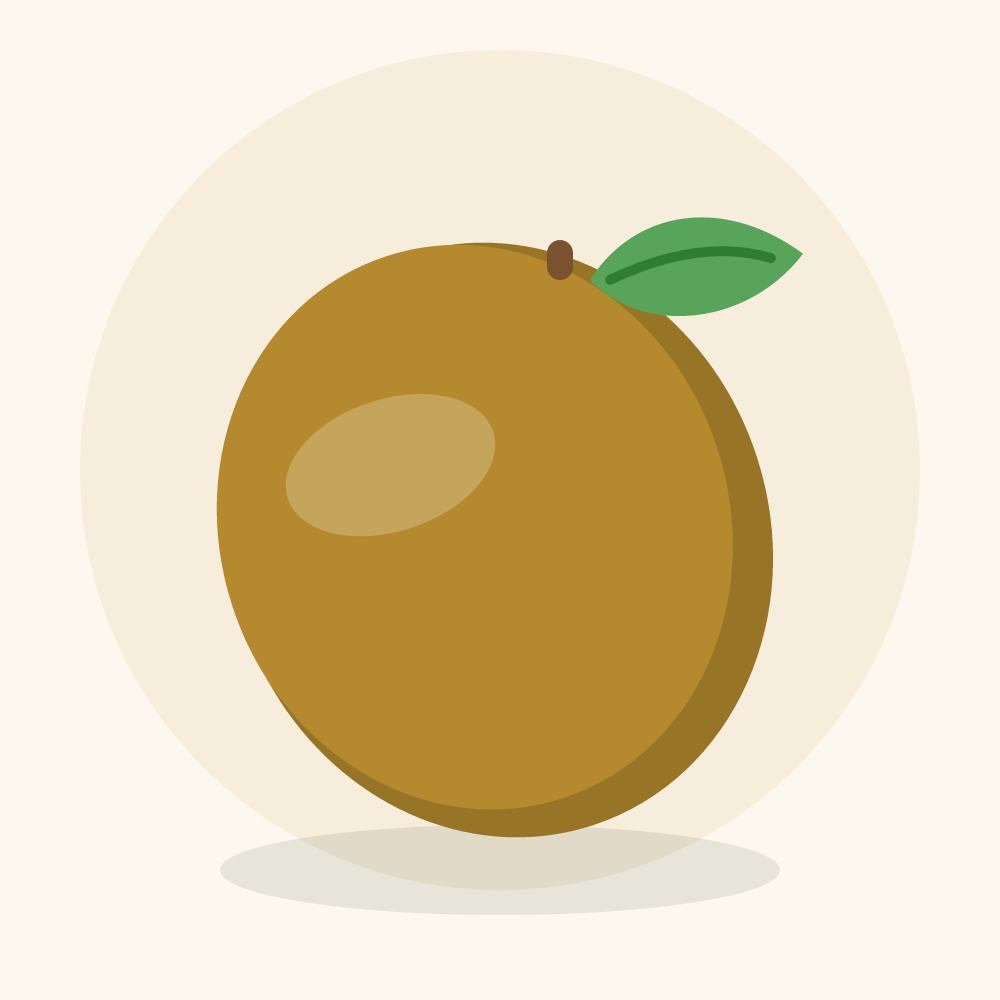
At a glance
- Taste
- Bittersweet and sticky, with a thin date-like flesh around a hard stone; the ripe pulp is chewy and molasses-sweet with a bitter edge, eaten fresh or soaked into drinks.
- Origin
- The Sahel, dry Africa, the Middle East, and South Asia
- Grown in
- Sudan, Nigeria, Egypt, Niger, India
- Peak season
- Winter, Spring
Sensory & practical profile
Taste fingerprint
- Sweetness
- Tartness
- Aroma
- Juiciness
- Firmness
Approximate, at peak ripeness · 0–5
- Ripe when
- Fruit turns yellow to brown and softens with a sweet, date-like smell; often gathered ripe from the ground.
- How to eat
- Eat the sweet-bitter pulp off the hard stone fresh, soak it into a drink, or dry it like a date for storage.
- Typical price
- Budget
The desert date is a one-tree survival kit — food, cooking oil, medicine, soap (from its saponins), and fodder — which is why it has sustained life across the Sahel for thousands of years and appears painted in ancient Egyptian tombs.
When it's in season, by region
| Region | Peak months |
|---|---|
| Africa | Dry-season fruiting, roughly Dec–Apr across the Sahel |
How to select & store
Picking a ripe one
Choose fully ripe yellow-to-brown fruit that is slightly soft and sweet-smelling; it's often gathered from the ground. Green fruit is bitter and unripe.
Storing it
The date-like fruit dries and keeps for a long time, like a date — a key trait for a dry-season food. Store dried in a cool place.
Practical uses
🍽️ Culinary
- Ripe pulp eaten fresh or soaked into a sweet drink
- Dried and stored like dates for the lean season
- Seed kernel pressed for edible oil; young leaves and shoots eaten as a vegetable
- Fermented into a traditional beverage
🌿 Health & traditional
- One of the most important medicinal trees of the Sahel, used for many complaints
- Saponins from the bark and fruit traditionally used as soap and to stun fish
🎎 Cultural
- A cornerstone survival tree of arid Africa, providing food, oil, medicine, soap, and fodder
- Depicted in ancient Egyptian tombs; heglig has been eaten along the Nile for millennia
Eating desert date: what to know
What regular consumption looks like
Desert date is a nutritious everyday fruit, best enjoyed as part of a varied diet. It is a good source of fibre (about 5 g per 100 g), which supports digestion and satiety.
Sensible amounts
A typical fruit serving is roughly a handful, one medium fruit, or about 80 g, and two or more varied fruit servings a day is a sensible everyday pattern. Because it is high in natural sugar, keep portions modest if you are watching blood sugar or weight — whole fruit's fibre softens the sugar hit, but juices and dried forms concentrate it and are easy to over-eat.
Evidence & conditions
As a whole fruit, Desert date contributes fibre, vitamins, and beneficial plant compounds, but it has not been shown to treat or prevent any specific condition — so it is best enjoyed as part of a healthy diet rather than as a remedy.
Desert date: frequently asked questions
What does desert date taste like?
Bittersweet and sticky, with a thin date-like flesh around a hard stone; the ripe pulp is chewy and molasses-sweet with a bitter edge, eaten fresh or soaked into drinks.
When is desert date in season?
Desert date is typically in season Africa (Dry-season fruiting, roughly Dec–Apr across the Sahel). Peak months shift between the northern and southern hemispheres.
How do you eat desert date?
Eat the sweet-bitter pulp off the hard stone fresh, soak it into a drink, or dry it like a date for storage.
How do you know when desert date is ripe?
Fruit turns yellow to brown and softens with a sweet, date-like smell; often gathered ripe from the ground.
Is desert date good for you?
Desert date is a nutritious everyday fruit, best enjoyed as part of a varied diet. It is a good source of fibre (about 5 g per 100 g), which supports digestion and satiety.
How much desert date should you eat?
A typical fruit serving is roughly a handful, one medium fruit, or about 80 g, and two or more varied fruit servings a day is a sensible everyday pattern. Because it is high in natural sugar, keep portions modest if you are watching blood sugar or weight — whole fruit's fibre softens the sugar hit, but juices and dried forms concentrate it and are easy to over-eat.
In the harshest dry country of the Sahel and arid Africa, where drought is measured in seasons, the desert date endures. This thorny, tough tree bears bittersweet, date-like fruit that has been a famine food and dry-season staple across the arid belt for thousands of years — its image even painted in ancient Egyptian tombs.
A one-tree survival kit
The fruit is only part of the story. Its energy-dense, molasses-sweet pulp is eaten fresh, soaked into drinks, or dried like a date for the lean months; the seed kernel is pressed for edible oil; the young leaves are eaten as a vegetable. And the whole plant is rich in saponins, traditionally used as soap and to stun fish — hence “soapberry tree.” Add its role as fodder and one of the Sahel’s most important medicinal trees, and the desert date becomes a genuine one-tree survival kit, a plant that turns country too dry for almost anything else into food, oil, medicine, and soap. For its fellow drought-defying dry-land fruits, see the ber and jujube.
If you like desert date, try these

.jpg?width=800)
In season with desert date

.jpg?width=800)

.jpg?width=800)