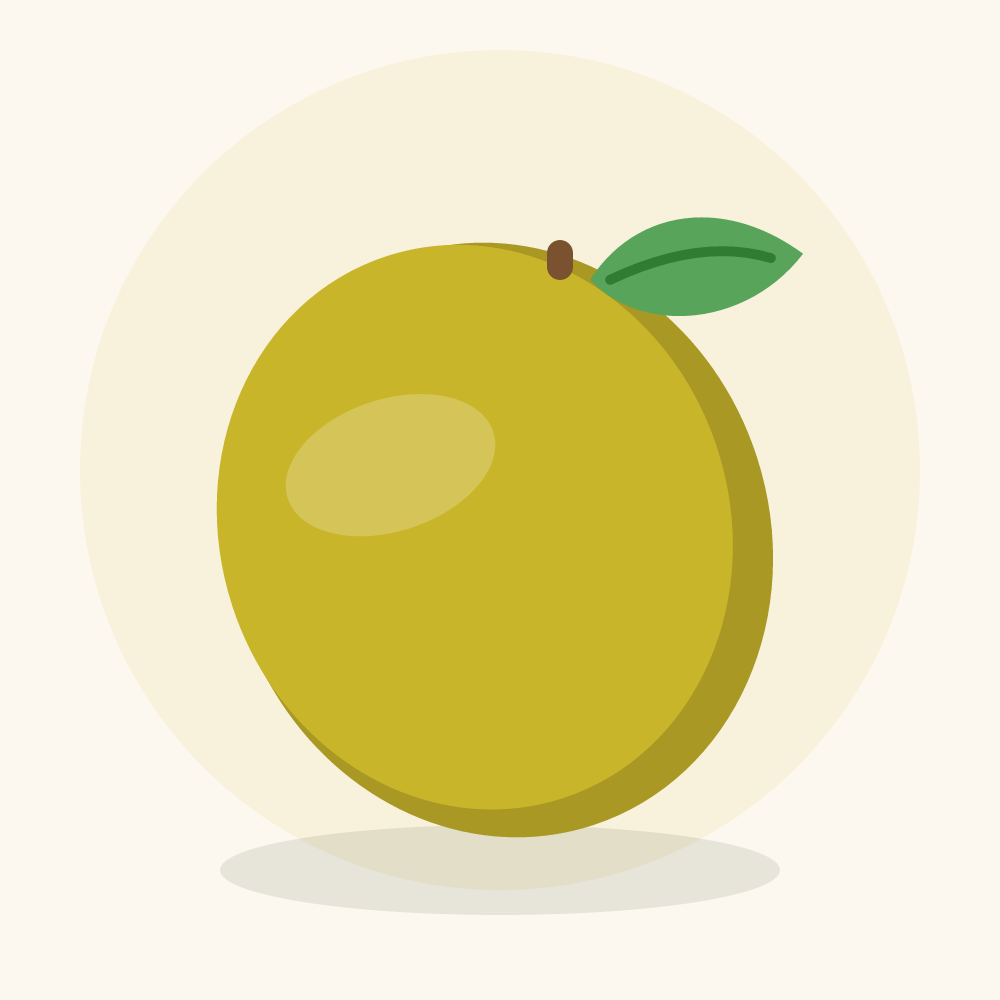
Shikuwasa
Citrus depressa · Rutaceae · also known as Shequasar, Hirami lemon, Flat lemon, Taiwan tangerine, Shiikuwaasha, シークヮーサー
Okinawa's small green souring citrus — sharp enough to be used like a lime, squeezed over everything from grilled fish to awamori, and grown in villages that keep turning up in longevity research.
At a glance
- Taste
- Very sour and aromatic, closer to a lime than a mandarin, with a distinctive bitter-floral edge from the peel. Picked green it is a souring agent; left to ripen orange it turns mild and sweet enough to eat, though few bother.
- Origin
- The Ryukyu Islands and Taiwan
- Grown in
- Japan, Taiwan
- Peak season
- Autumn, Winter
- Notable varieties
- Katsuyama kugani, Izumi kugani, Ogimi types
Sensory & practical profile
Taste fingerprint
- Sweetness
- Tartness
- Aroma
- Juiciness
- Firmness
Approximate, at peak ripeness · 0–5
- Ripe when
- There are two useful stages. Deep green and firm is the souring stage, harvested late summer into autumn — this is what nearly all of the crop is picked at. Left on the tree into winter it turns orange and sweet.
- How to eat
- Halve and squeeze it over food, the way you would a lime — that is the point of it. Fully ripened orange fruit can be eaten fresh, but the green souring stage is what Okinawa grows it for.
- Typical price
- Everyday
The name is Okinawan rather than standard Japanese: shii means sour and kuwasa means to make something eat it, so shikuwasa is literally the fruit that makes things sour.
When it's in season, by region
| Region | Peak months |
|---|---|
| East Asia | Aug-Oct for the green souring stage; Dec-Feb for ripe orange fruit |
How to select & store
Picking a ripe one
For juice, choose small firm deep-green fruit that feels heavy — that is the souring stage. Fully orange fruit is the late, sweet stage and is a different ingredient. Reject anything light, wrinkled or soft.
Storing it
A week or two refrigerated. Most of the crop is juiced and bottled rather than sold fresh, and the juice keeps months chilled — which is how it reaches anyone outside Okinawa.
Practical uses
🍽️ Culinary
- Squeezed over grilled fish, sashimi and Okinawan soba
- Mixed into awamori, the Okinawan distilled spirit
- Bottled juice, by far the most common form
- Peel dried and used as a seasoning; the ripe fruit eaten fresh
🌿 Health & traditional
- Very widely consumed in Okinawa and studied for its nobiletin content; this is a well-documented pattern of local use and an active research subject, not a demonstrated treatment for anything
🎎 Cultural
- Ogimi village in northern Okinawa, a major shikuwasa-growing area, is repeatedly cited in longevity research and markets itself accordingly
- The name means the fruit that makes things sour in the Okinawan language
Eating shikuwasa: what to know
What regular consumption looks like
Shikuwasa is mostly water with natural sugars, a little fibre, and assorted micronutrients — a hydrating everyday addition to your overall fruit intake rather than a standout for any one nutrient.
Sensible amounts
A typical fruit serving is roughly a handful, one medium fruit, or about 80 g, and two or more varied fruit servings a day is a sensible everyday pattern.
Evidence & conditions
As a whole fruit, Shikuwasa contributes fibre, vitamins, and beneficial plant compounds, but it has not been shown to treat or prevent any specific condition — so it is best enjoyed as part of a healthy diet rather than as a remedy.
Shikuwasa: frequently asked questions
What does shikuwasa taste like?
Very sour and aromatic, closer to a lime than a mandarin, with a distinctive bitter-floral edge from the peel. Picked green it is a souring agent; left to ripen orange it turns mild and sweet enough to eat, though few bother.
When is shikuwasa in season?
Shikuwasa is typically in season East Asia (Aug-Oct for the green souring stage; Dec-Feb for ripe orange fruit). Peak months shift between the northern and southern hemispheres.
How do you eat shikuwasa?
Halve and squeeze it over food, the way you would a lime — that is the point of it. Fully ripened orange fruit can be eaten fresh, but the green souring stage is what Okinawa grows it for.
How do you know when shikuwasa is ripe?
There are two useful stages. Deep green and firm is the souring stage, harvested late summer into autumn — this is what nearly all of the crop is picked at. Left on the tree into winter it turns orange and sweet.
Is shikuwasa good for you?
Shikuwasa is mostly water with natural sugars, a little fibre, and assorted micronutrients — a hydrating everyday addition to your overall fruit intake rather than a standout for any one nutrient.
How much shikuwasa should you eat?
A typical fruit serving is roughly a handful, one medium fruit, or about 80 g, and two or more varied fruit servings a day is a sensible everyday pattern.
What does shikuwasa taste like?
Sharply sour and strongly aromatic — much closer to a lime or a calamansi than to a mandarin, with a bitter-floral note carried by the peel. That is the green stage, which is what almost the entire crop is picked at. If the fruit is left on the tree into winter it turns orange, loses most of its acid and becomes mild and sweet enough to eat out of hand, though relatively little is grown for that.
What does the name mean?
It is Okinawan rather than standard Japanese. Shii means sour and kuwasa means to feed or to make eat, so shikuwasa is literally the fruit that makes things sour — a name describing its job rather than the plant. The English trade name hirami lemon, flat lemon, describes its slightly squashed shape.
Is shikuwasa connected to Okinawan longevity?
It is a genuine and active research subject rather than a settled finding. Shikuwasa is unusually high in nobiletin, a citrus flavonoid studied in laboratory and animal work, and Ogimi village in northern Okinawa is both a major growing area and frequently cited in longevity research. What has not been shown is that the fruit causes the longevity. Treat it as a well-documented local food with an interesting compound, not a health intervention. This is general information, not medical advice.
Shikuwasa is Okinawa’s lime, and its name is a job description.
The fruit that makes things sour
In the Okinawan language shii means sour and kuwasa means to make something eat it. Shikuwasa is, literally, the fruit you use to make other things sour — which is exactly what happens to nearly all of it. It is squeezed over grilled fish and sashimi, into Okinawan soba, and into awamori, the local distilled spirit.
The fruit itself is small, slightly flattened, and picked deep green. English trade names call it hirami lemon or flat lemon after that shape.
Two stages, two ingredients
Most citrus has one useful ripeness. Shikuwasa has two, and they are not interchangeable:
- Green, harvested late summer into autumn — sharply sour, intensely aromatic, used like a lime. This is the crop.
- Orange, if left on the tree into winter — the acid falls away and it becomes mild and sweet enough to eat fresh. Comparatively little is grown for this.
Buy green fruit for juice and you get what Okinawa grows it for.
Ogimi, and what can honestly be said
Shikuwasa is unusually rich in nobiletin, a citrus flavonoid that has attracted a good deal of laboratory and animal research. Ogimi village in northern Okinawa is both a major growing area and a place that turns up repeatedly in longevity studies, and it markets itself on exactly that association.
What has not been demonstrated is that the fruit causes the longevity. The honest statement is that this is a widely eaten local food containing a compound under active study — which is interesting, and is not the same as a health claim.
A note on nutrition
We hold no nutrition figures for shikuwasa. The figure sets we could reach are internally inconsistent — one lists 25 kcal alongside 0.32 g of carbohydrate and 0.03 g of protein, which cannot both be true. Rather than pick the plausible-looking numbers, the table is omitted and this entry is excluded from our nutrition rankings.
If you like shikuwasa, try these


In season with shikuwasa

.jpg?width=800)
.jpg?width=800)