Pili
Canarium ovatum · Burseraceae · also known as Pili nut, Pili tree
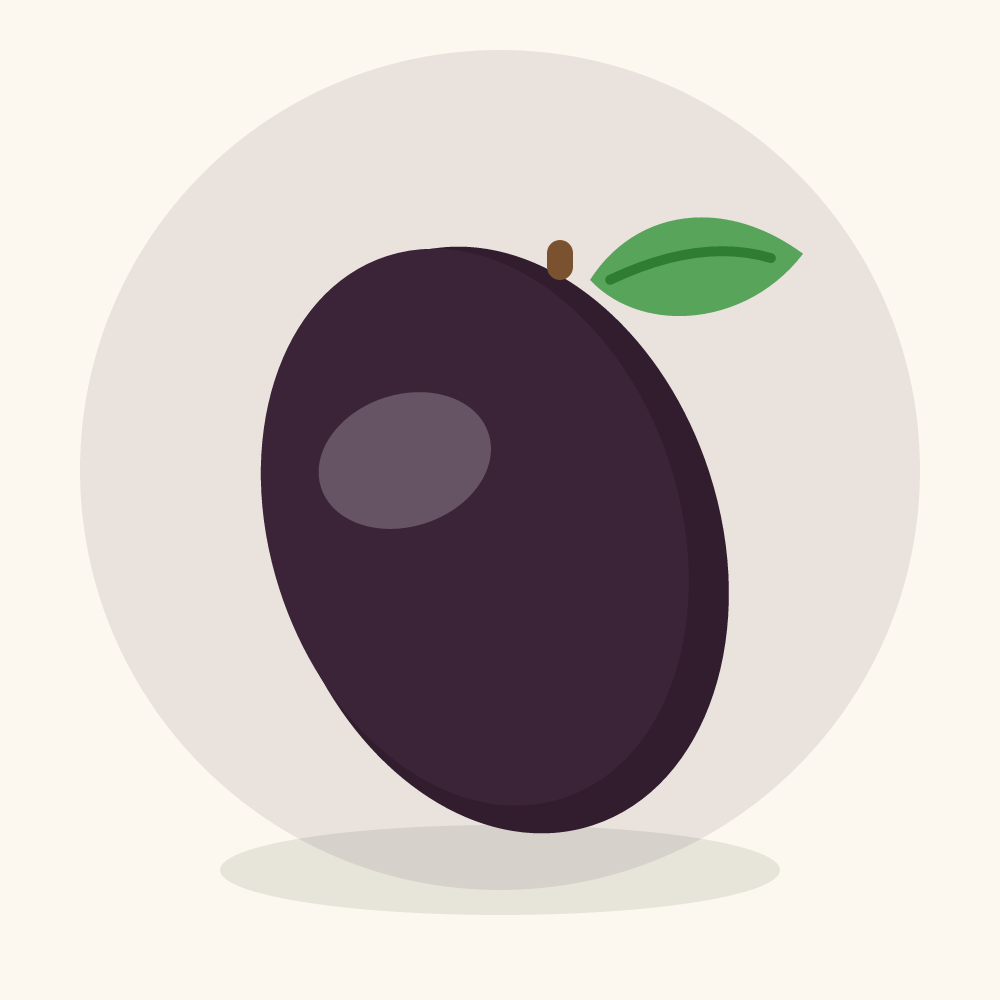
The Philippines' own tree nut — a purplish-black, olive-like drupe from Bicol whose boiled pulp is eaten with salt or fish sauce and whose rich kernel goes into the region's famous candies, brittles and pastries.
At a glance
- Taste
- The kernel is the prize — raw it tastes rather like a roasted pumpkin seed; roasted it turns rich, buttery and nutty with a waxy, pine-nut-like bite. The thin pulp around the shell, once boiled, is soft and starchy like sweet potato and oily rather than sweet.
- Origin
- The Philippines — native there, with the Bicol region (Sorsogon, Albay, Camarines Sur) the centre of production
- Grown in
- Philippines
- Peak season
- Spring, Summer, Autumn
Sensory & practical profile
Taste fingerprint
- Sweetness
- Tartness
- Aroma
- Juiciness
- Firmness
Approximate, at peak ripeness · 0–5
- Ripe when
- The skin has turned from light green to purplish-black; the season runs May to October in the Philippines, peaking June to August.
- How to eat
- Boil the ripe fruit briefly and eat the softened pulp with salt or fish sauce; crack the hard shell for the kernel, then peel off its thin brown seed coat and eat it raw, roasted or candied.
Pili is grown and processed in commercial quantity in only one country, the Philippines, and the Bicol region is the heart of that trade.
When it's in season, by region
| Region | Peak months |
|---|---|
| Southeast Asia | May–Oct, peak Jun–Aug (Philippines) |
How to select & store
Picking a ripe one
Buy kernels that are plump, cream-coloured and smell clean; a bitter taste or a turpentine-like odour marks a poor kernel. For the fresh fruit, pick drupes that have turned from green to purplish-black.
Storing it
Shelled kernels are very oily, so keep them airtight in the fridge or freezer to stop them turning rancid. Fresh fruit should be boiled and eaten within days of harvest.
Practical uses
🍽️ Culinary
- Kernels roasted and salted, or sugar-coated, as a snack
- Pili candies and brittle
- Kernels used in bakery products and as a flavouring for ice cream
- Ripe pulp boiled and eaten with salt or fish sauce
- Young shoots eaten in salads
🎎 Cultural
- The Philippines is the only country that produces and processes pili in commercial quantity
- A flagship commodity of the Bicol region
Eating pili: what to know
What regular consumption looks like
Pili is mostly water with natural sugars, a little fibre, and assorted micronutrients — a hydrating everyday addition to your overall fruit intake rather than a standout for any one nutrient.
Sensible amounts
A typical fruit serving is roughly a handful, one medium fruit, or about 80 g, and two or more varied fruit servings a day is a sensible everyday pattern.
Evidence & conditions
As a whole fruit, Pili contributes fibre, vitamins, and beneficial plant compounds, but it has not been shown to treat or prevent any specific condition — so it is best enjoyed as part of a healthy diet rather than as a remedy.
Pili: frequently asked questions
What does pili taste like?
The kernel is the prize — raw it tastes rather like a roasted pumpkin seed; roasted it turns rich, buttery and nutty with a waxy, pine-nut-like bite. The thin pulp around the shell, once boiled, is soft and starchy like sweet potato and oily rather than sweet.
When is pili in season?
Pili is typically in season Southeast Asia (May–Oct, peak Jun–Aug (Philippines)). Peak months shift between the northern and southern hemispheres.
How do you eat pili?
Boil the ripe fruit briefly and eat the softened pulp with salt or fish sauce; crack the hard shell for the kernel, then peel off its thin brown seed coat and eat it raw, roasted or candied.
How do you know when pili is ripe?
The skin has turned from light green to purplish-black; the season runs May to October in the Philippines, peaking June to August.
Is pili good for you?
Pili is mostly water with natural sugars, a little fibre, and assorted micronutrients — a hydrating everyday addition to your overall fruit intake rather than a standout for any one nutrient.
How much pili should you eat?
A typical fruit serving is roughly a handful, one medium fruit, or about 80 g, and two or more varied fruit servings a day is a sensible everyday pattern.
Pili is a Philippine native: Canarium ovatum, a tree of the frankincense family whose olive-shaped fruit ripens from light green to purplish-black. The Philippines is the only country that grows and processes it in commercial quantity, and the Bicol region — Sorsogon, Albay and Camarines Sur — is where most of it comes from.
When is pili in season?
The trees flower with the annual flush of new leaves, between March and June in the Philippines. Fruit ripens from May to October, with the peak in June to August. Outside those months you will find shelled and processed kernels, not fresh fruit.
Two foods in one fruit
Each drupe, roughly 3.5–6 cm long, holds a hard, pointed shell around the kernel.
- The pulp. The thin flesh outside the shell is inedible raw but softens when boiled, taking on a starchy, sweet-potato texture. It is eaten seasoned with salt or fish sauce, and it is oily enough that the oil is occasionally pressed out for cooking.
- The kernel. This is what pili is known for. Raw, it tastes rather like a roasted pumpkin seed; roasted, it becomes rich and buttery with a waxy, pine-nut-like bite. It goes into candies, brittles and baked goods and is used to flavour ice cream.
Some kernels are bitter or fibrous, or smell of turpentine; those are best discarded.
Nutrition
USDA’s SR Legacy table lists dried pili kernels (FoodData Central 170590) at 719 kcal, 79.6 g fat, 10.8 g protein and 4.0 g carbohydrate per 100 g. Most of it is oil, which makes pili one of the most calorie-dense nuts there is. Those figures describe the dried kernel, not the whole fruit, so they are not used in the site’s per-fruit rankings.
Relatives
Its closest kin on this site is Borneo’s dabai, another Canarium whose black fruit is softened in warm water and eaten with soy sauce. Central Africa’s safou, from the same family, is also cooked to soften an oily, savoury pulp.
If you like pili, try these


In season with pili