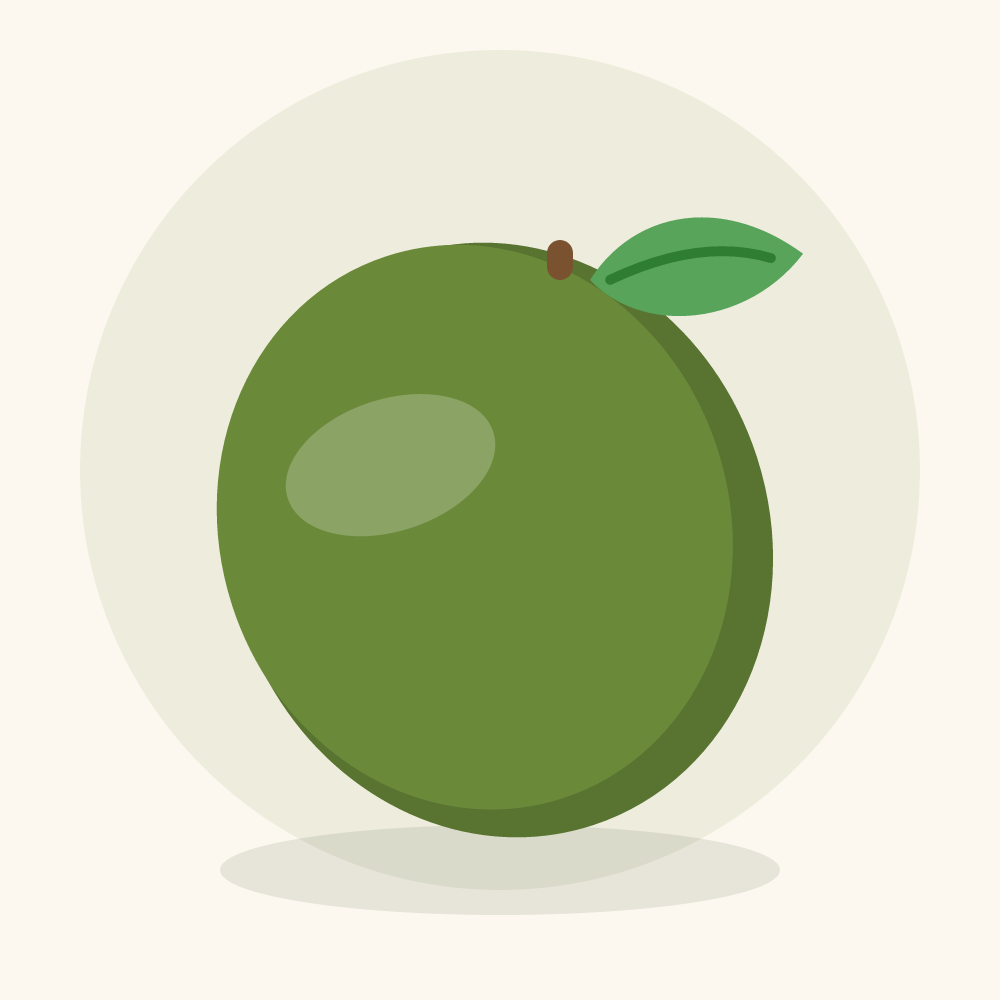
Mube
Stauntonia hexaphylla · Lardizabalaceae · also known as Japanese staunton vine, Mube, Yemuguo
A purple, egg-shaped East Asian fruit like a sweeter akebi that never splits open — sweet, mild, jelly-like pulp full of seeds, foraged in Japan and China. Once an imperial tribute fruit in Japan, still offered ceremonially today.
At a glance
- Taste
- Sweet and mild with soft, translucent, jelly-like pulp tasting faintly of melon and lychee; gentler and sweeter than akebi, with many seeds and a thick purple rind that stays closed.
- Origin
- Japan, Korea, and China
- Grown in
- Japan, South Korea, China
- Peak season
- Autumn
Sensory & practical profile
Taste fingerprint
- Sweetness
- Tartness
- Aroma
- Juiciness
- Firmness
Approximate, at peak ripeness · 0–5
- Ripe when
- Fully purple and slightly soft — but note it does NOT split open like akebi, so go by color and give, not a gaping seam.
- How to eat
- Cut or tear the thick rind and scoop the sweet jelly-like pulp, spitting the many seeds.
- Typical price
- Premium
Mube was once a tribute fruit sent to the Japanese emperor — and unlike its cousin akebi, which unzips itself when ripe, mube keeps its thick purple rind sealed, so you have to open it yourself.
When it's in season, by region
| Region | Peak months |
|---|---|
| East Asia | Oct–Nov (Japan, China) |
How to select & store
Picking a ripe one
Choose fully purple, slightly soft fruit; unlike akebi, mube does not split open when ripe, so judge by color and give. A sweet smell means ready.
Storing it
A few days at room temperature once ripe. Best eaten fresh soon after; the pulp is delicate and the season short.
Practical uses
🍽️ Culinary
- Pulp scooped and eaten fresh, seeds spat out
- Made into jams, wines, and drinks
- Occasionally used decoratively for its handsome purple fruit
🌿 Health & traditional
- The vine and fruit used in Chinese and Japanese traditional medicine as a diuretic and tonic
🎎 Cultural
- Historically presented to the Japanese imperial court as a tribute fruit; still offered ceremonially at some shrines
- The evergreen vine is grown ornamentally worldwide
Eating mube: what to know
What regular consumption looks like
Mube is mostly water with natural sugars, a little fibre, and assorted micronutrients — a hydrating everyday addition to your overall fruit intake rather than a standout for any one nutrient.
Sensible amounts
A typical fruit serving is roughly a handful, one medium fruit, or about 80 g, and two or more varied fruit servings a day is a sensible everyday pattern.
Evidence & conditions
As a whole fruit, Mube contributes fibre, vitamins, and beneficial plant compounds, but it has not been shown to treat or prevent any specific condition — so it is best enjoyed as part of a healthy diet rather than as a remedy.
Mube: frequently asked questions
What does mube taste like?
Sweet and mild with soft, translucent, jelly-like pulp tasting faintly of melon and lychee; gentler and sweeter than akebi, with many seeds and a thick purple rind that stays closed.
When is mube in season?
Mube is typically in season East Asia (Oct–Nov (Japan, China)). Peak months shift between the northern and southern hemispheres.
How do you eat mube?
Cut or tear the thick rind and scoop the sweet jelly-like pulp, spitting the many seeds.
How do you know when mube is ripe?
Fully purple and slightly soft — but note it does NOT split open like akebi, so go by color and give, not a gaping seam.
Is mube good for you?
Mube is mostly water with natural sugars, a little fibre, and assorted micronutrients — a hydrating everyday addition to your overall fruit intake rather than a standout for any one nutrient.
How much mube should you eat?
A typical fruit serving is roughly a handful, one medium fruit, or about 80 g, and two or more varied fruit servings a day is a sensible everyday pattern.
The mube is the akebi’s sweeter, more discreet cousin. Both are purple, egg-shaped fruits of East Asian vines with soft, jelly-like, seed-filled pulp — but where akebi dramatically splits open when ripe, mube keeps its thick purple rind sealed, so you have to open it yourself. And the flesh inside is gentler and sweeter, tasting faintly of melon and lychee.
An imperial fruit
Mube carries a touch of ceremony. Historically it was presented to the Japanese imperial court as a tribute fruit, and it’s still offered ritually at some shrines today — a fitting honor for a handsome, sweet, evergreen-vine fruit. Foraged and grown across Japan, Korea, and China, the ripe pulp is scooped and eaten fresh (seeds spat out), or made into jams, wines, and drinks, while the vine and fruit feature in East Asian folk medicine as a diuretic and tonic. The evergreen vine, with its glossy leaves, is grown ornamentally around the world, though few of those gardeners ever taste the fruit. Milder than akebi and rarely sold commercially, mube is a gentle, sweet reward for the East Asian autumn forager — an imperial fruit hiding on a garden vine.
If you like mube, try these


In season with mube

.jpg?width=800)