Rio Grande cherry
Eugenia involucrata · Myrtaceae · also known as Cereja-do-rio-grande, Cerejeira-do-mato, Brazilian cherry
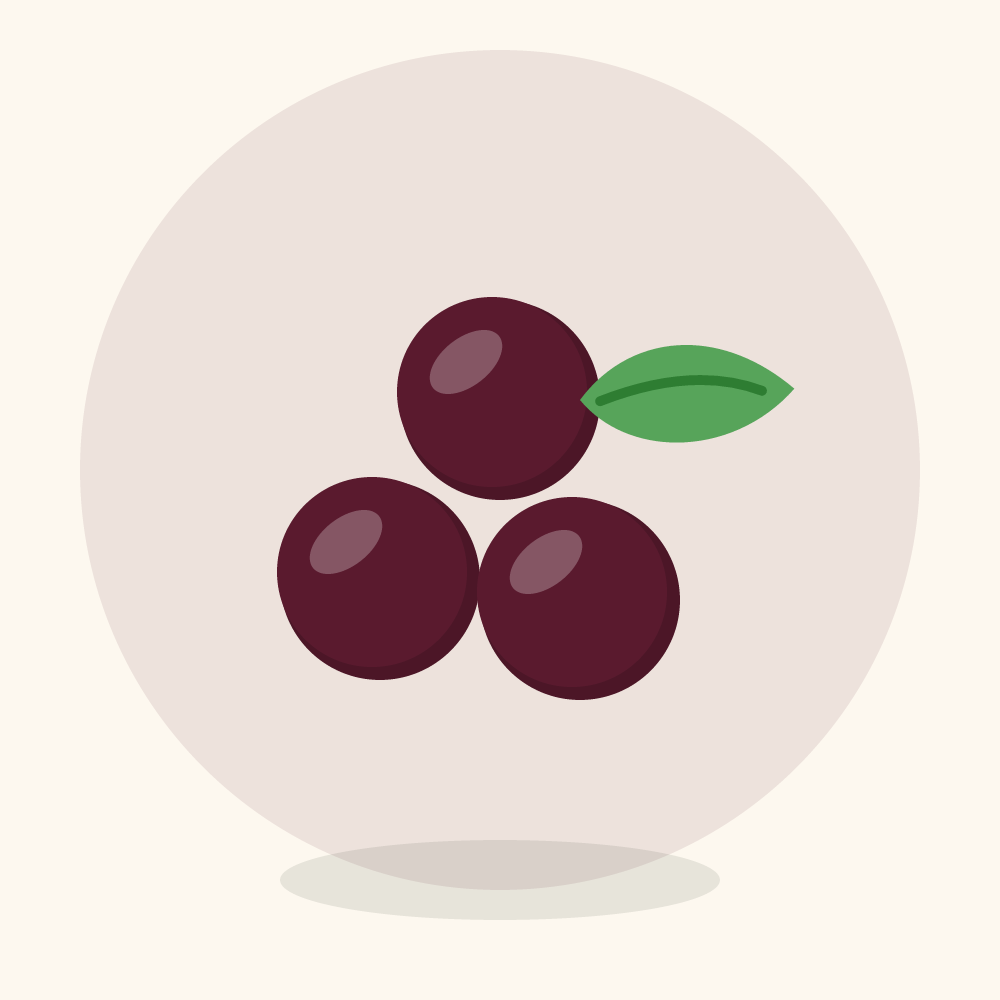
A dark red-to-purple Brazilian cherry from the Atlantic forest — glossy, juicy, and sweet with a slight tang, ripening fast in late spring. A cherished southern-Brazilian native, less known than the pitanga but rated by many as the finest of the Eugenia cherries.
At a glance
- Taste
- Sweet and juicy with a mild tartness and a clean cherry-plum flavor, smoother and less resinous than the Surinam cherry; the glossy dark fruit has thin skin and one or two soft seeds.
- Origin
- Southern Brazil and neighboring South America
- Grown in
- Brazil, Argentina, Uruguay, Paraguay
- Peak season
- Spring, Summer
Sensory & practical profile
Taste fingerprint
- Sweetness
- Tartness
- Aroma
- Juiciness
- Firmness
Approximate, at peak ripeness · 0–5
- Ripe when
- Fully dark red-to-purple, glossy, and slightly soft, releasing easily; it ripens fast, so catch it at peak.
- How to eat
- Pop it fresh like a cherry (spit the one or two soft seeds), or cook the surplus into jam, juice, and liqueur.
- Typical price
- Everyday
Among Brazil's native Eugenia cherries — grumichama, pitanga, and this one — many fruit lovers quietly rate the cereja-do-rio-grande the best of all, smoother and sweeter, yet it remains the least known outside its southern homeland.
When it's in season, by region
| Region | Peak months |
|---|---|
| Latin America | Oct–Dec (southern Brazil) |
How to select & store
Picking a ripe one
Choose fully dark red-to-purple, glossy, slightly soft fruit; it ripens quickly, so eat soon. Underripe orange-red fruit is tart and not yet at its best.
Storing it
A day or two refrigerated — soft and perishable. Best eaten fresh off the tree, with the surplus made into jam, juice, or liqueur.
Practical uses
🍽️ Culinary
- Eaten fresh, straight from the tree, at peak ripeness
- Jams, juices, and sorbets
- Liqueurs and fruit wines
- Folded into cakes and desserts, like a cherry
🌿 Health & traditional
- Leaves used in Brazilian folk teas; antioxidant-rich fruit
🎎 Cultural
- A prized native fruit of southern Brazil (Rio Grande do Sul), gathered from wild and backyard trees
- Increasingly planted by native-fruit enthusiasts restoring Atlantic-forest species
Eating rio grande cherry: what to know
What regular consumption looks like
Rio Grande cherry is a nutritious everyday fruit, best enjoyed as part of a varied diet. It is a good source of vitamin C (about 30 mg per 100 g), supporting immune function and helping the body absorb iron from plant foods. Its pigments and polyphenols are antioxidants that population studies associate with heart health, though that reflects overall diet rather than any single fruit.
Sensible amounts
A typical fruit serving is roughly a handful, one medium fruit, or about 80 g, and two or more varied fruit servings a day is a sensible everyday pattern.
Evidence & conditions
As a whole fruit, Rio Grande cherry contributes fibre, vitamins, and beneficial plant compounds, but it has not been shown to treat or prevent any specific condition — so it is best enjoyed as part of a healthy diet rather than as a remedy.
Rio Grande cherry: frequently asked questions
What does rio grande cherry taste like?
Sweet and juicy with a mild tartness and a clean cherry-plum flavor, smoother and less resinous than the Surinam cherry; the glossy dark fruit has thin skin and one or two soft seeds.
When is rio grande cherry in season?
Rio Grande cherry is typically in season Latin America (Oct–Dec (southern Brazil)). Peak months shift between the northern and southern hemispheres.
How do you eat rio grande cherry?
Pop it fresh like a cherry (spit the one or two soft seeds), or cook the surplus into jam, juice, and liqueur.
How do you know when rio grande cherry is ripe?
Fully dark red-to-purple, glossy, and slightly soft, releasing easily; it ripens fast, so catch it at peak.
Is rio grande cherry good for you?
Rio Grande cherry is a nutritious everyday fruit, best enjoyed as part of a varied diet. It is a good source of vitamin C (about 30 mg per 100 g), supporting immune function and helping the body absorb iron from plant foods. Its pigments and polyphenols are antioxidants that population studies associate with heart health, though that reflects overall diet rather than any single fruit.
How much rio grande cherry should you eat?
A typical fruit serving is roughly a handful, one medium fruit, or about 80 g, and two or more varied fruit servings a day is a sensible everyday pattern.
Brazil’s Atlantic forest is a treasure house of native cherries, and the Rio Grande cherry — cereja-do-rio-grande — may be the pick of them. Glossy, dark red-to-purple, juicy, and sweet with just a hint of tang, it’s smoother and less resinous than the famous Surinam cherry, and many fruit lovers quietly rate it the best of the whole Eugenia clan.
Southern Brazil’s secret cherry
Native to Rio Grande do Sul and neighboring South America, it ripens fast in late spring, its thin-skinned fruit best eaten straight off the tree at peak — glossy, dark, and releasing at a touch. The surplus becomes jam, juice, sorbet, liqueur, and cherry-style desserts, its anthocyanin-rich skin and clean flavor doing lovely work. A Myrtaceae cousin of the grumichama and uvaia, it belongs to Brazil’s remarkable family of aromatic backyard fruits, and like several of them it’s being replanted by enthusiasts restoring the Atlantic forest. Less known than the pitanga, perishable, and rarely exported, it’s a fruit that rewards anyone who seeks it out where it grows — a southern-Brazilian cherry worth the trip.
If you like rio grande cherry, try these

.jpg?width=800)


In season with rio grande cherry

.jpg?width=800)
.jpg?width=800)