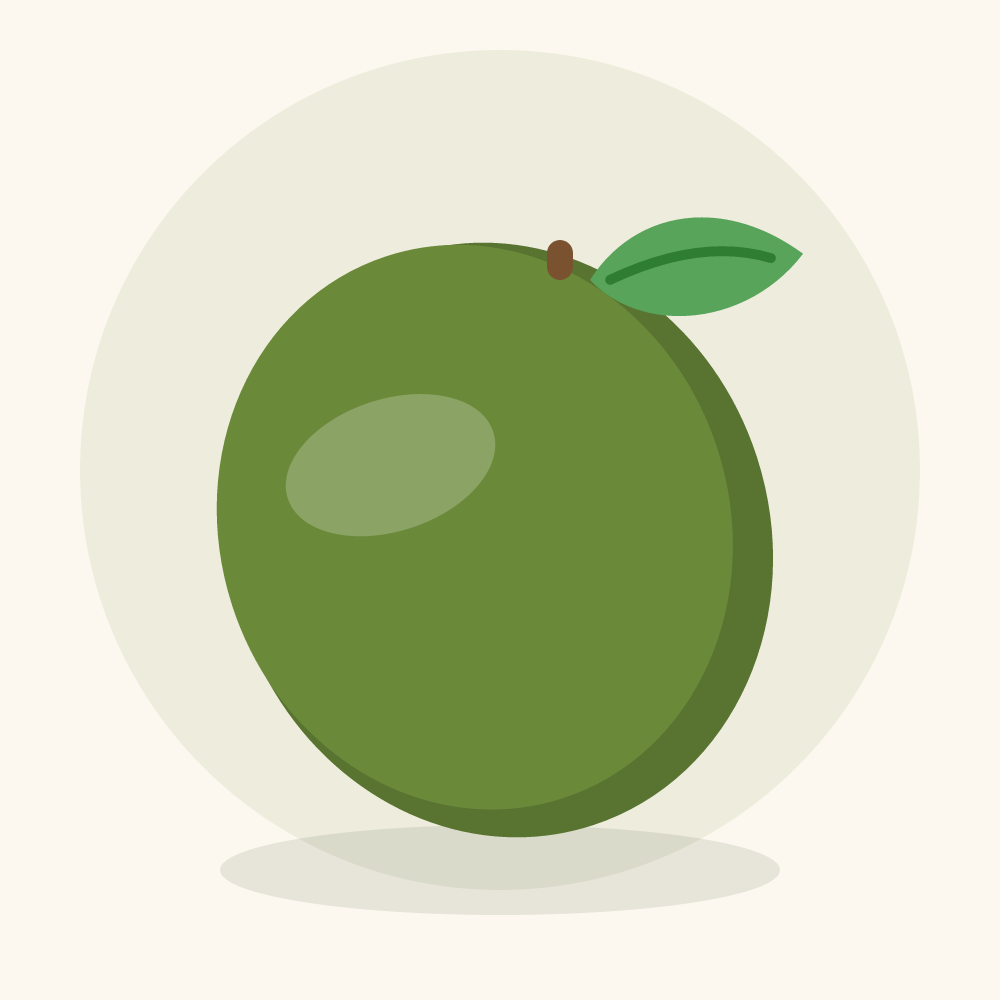
Bitter kola
Garcinia kola · Clusiaceae · also known as Bitter cola, Orogbo, Akaan, Miji-goro, False kola, Garcinia nut
A West African seed chewed for its long bitter burn — nothing to do with true kola nut despite the name, and a fixture of Nigerian hospitality, ceremony and market stalls from Lagos to Douala.

At a glance
- Taste
- Intensely bitter at first, then astringent, then unexpectedly sweet as the aftertaste turns — a progression chewers describe as the whole point. Firm and crisp, closer to a raw nut than a fruit.
- Origin
- The lowland rainforests of West and Central Africa
- Grown in
- Nigeria, Cameroon, Ghana, Benin, Ivory Coast, Democratic Republic of the Congo
- Peak season
- Autumn, Winter
- Notable varieties
- Wild-collected; no named cultivars
Sensory & practical profile
Taste fingerprint
- Sweetness
- Tartness
- Aroma
- Juiciness
- Firmness
Approximate, at peak ripeness · 0–5
- Ripe when
- The orange-yellow fruit softens and drops, and the seeds inside are full and plump with pale intact skin. The seed rather than the fruit is what is judged, and it should be firm and snap cleanly.
- How to eat
- Peel the thin skin from the seed and chew it slowly. The bitterness is severe at first and then resolves into sweetness — rushing it defeats the purpose. One or two seeds is a normal serving.
- Typical price
- Budget
Bitter kola is not kola. True kola nut is Cola nitida or Cola acuminata, in a different genus entirely; bitter kola is Garcinia kola, a relative of the mangosteen. They are served side by side at Nigerian ceremonies, which is exactly how the naming confusion became permanent.
When it's in season, by region
| Region | Peak months |
|---|---|
| Africa | Roughly Sep–Dec across the West African forest belt |
How to select & store
Picking a ripe one
Choose plump, firm seeds with intact pale-brown skin and no shrivelling, cracking or mould. Fresh ones snap cleanly when broken; old ones are leathery and taste flat rather than sharply bitter.
Storing it
Keeps for weeks at room temperature in a dry, ventilated place, and longer refrigerated. Traditionally stored buried in damp sand or wrapped in leaves to stop it drying out and losing its bite.
Practical uses
🍽️ Culinary
- Chewed raw as a stimulant and digestive, the overwhelmingly usual form
- Offered to guests alongside true kola nut as a gesture of welcome
- Ground into traditional preparations and bitters
- The fruit pulp around the seeds is eaten in some areas, though the seed is the prize
🌿 Health & traditional
- Very widely used in West African traditional medicine for coughs, chest complaints and as a general tonic. There is a substantial laboratory literature on its compounds, but human clinical evidence is limited — this is a well-documented pattern of traditional use, not a demonstrated treatment for anything
🎎 Cultural
- Central to Yoruba and Igbo hospitality and ceremony, where orogbo is presented to guests
- Chewed by drivers and night workers across Nigeria for its stimulant effect
Eating bitter kola: what to know
What regular consumption looks like
Bitter kola is mostly water with natural sugars, a little fibre, and assorted micronutrients — a hydrating everyday addition to your overall fruit intake rather than a standout for any one nutrient.
Sensible amounts
A typical fruit serving is roughly a handful, one medium fruit, or about 80 g, and two or more varied fruit servings a day is a sensible everyday pattern.
Evidence & conditions
As a whole fruit, Bitter kola contributes fibre, vitamins, and beneficial plant compounds, but it has not been shown to treat or prevent any specific condition — so it is best enjoyed as part of a healthy diet rather than as a remedy.
Bitter kola: frequently asked questions
What does bitter kola taste like?
Intensely bitter at first, then astringent, then unexpectedly sweet as the aftertaste turns — a progression chewers describe as the whole point. Firm and crisp, closer to a raw nut than a fruit.
When is bitter kola in season?
Bitter kola is typically in season Africa (Roughly Sep–Dec across the West African forest belt). Peak months shift between the northern and southern hemispheres.
How do you eat bitter kola?
Peel the thin skin from the seed and chew it slowly. The bitterness is severe at first and then resolves into sweetness — rushing it defeats the purpose. One or two seeds is a normal serving.
How do you know when bitter kola is ripe?
The orange-yellow fruit softens and drops, and the seeds inside are full and plump with pale intact skin. The seed rather than the fruit is what is judged, and it should be firm and snap cleanly.
Is bitter kola good for you?
Bitter kola is mostly water with natural sugars, a little fibre, and assorted micronutrients — a hydrating everyday addition to your overall fruit intake rather than a standout for any one nutrient.
How much bitter kola should you eat?
A typical fruit serving is roughly a handful, one medium fruit, or about 80 g, and two or more varied fruit servings a day is a sensible everyday pattern.
Is bitter kola the same as kola nut?
No, and they are not even close relatives. True kola nut is Cola nitida or Cola acuminata, in the mallow family, and is the caffeine-bearing seed that gave cola drinks their name. Bitter kola is Garcinia kola, a relative of the mangosteen. They are commonly served together at Nigerian ceremonies and sold side by side, which is how the shared name stuck despite the botany.
Why does bitter kola taste sweet afterwards?
The initial bitterness and astringency fade quickly and leave the palate unusually sensitive, so anything eaten or drunk afterwards — even plain water — reads as sweet. Regular chewers treat this progression as the point of the experience rather than a side effect, and it is the most consistently described feature of the seed.
Does bitter kola have health benefits?
It is very widely used in West African traditional medicine, particularly for coughs and chest complaints, and there is a substantial laboratory literature on its compounds. What there is not is strong human clinical evidence that it treats any specific condition. The honest statement is that it is traditionally used for these purposes; that is a fact about usage, not about efficacy. This is general information, not medical advice.
Bitter kola is offered to guests across southern Nigeria, chewed by drivers through the night, and named after a plant it is not related to.
Not kola
True kola nut — the caffeine-bearing seed behind the word cola — is Cola nitida or Cola acuminata, in the mallow family. Bitter kola is Garcinia kola, a relative of the mangosteen and of kokum. The two are presented together at Yoruba and Igbo ceremonies and sold from the same market trays, which is how a name that belongs to one plant ended up attached to both.
The bitterness resolves
The seed is chewed raw. The first phase is genuinely severe — bitter and drying — and then it turns. The astringency clears, and what follows reads as distinctly sweet, to the point that plain water afterwards tastes sugared. That progression is the reason people chew it, and it takes a minute or two; rushing it gets you the bitterness without the payoff.
One or two seeds is a normal serving.
Tradition, and what we can and cannot say
Bitter kola carries a large body of traditional use across West Africa, especially for coughs and chest complaints, and a substantial laboratory literature on its compounds. Strong human clinical evidence that it treats a specific condition is not there. So the accurate statement is that it is very widely used for these purposes — which is a real, sourceable fact about how people use it, and a different claim from saying it works.
A note on nutrition
We hold no nutrition figures for bitter kola. It has not been analysed by USDA and we could not reach a national food-composition table for it. Rather than publish an estimate, the table is omitted and the entry is excluded from our nutrition rankings.
If you like bitter kola, try these
In season with bitter kola

.jpg?width=800)