Salal
Gaultheria shallon · Ericaceae · also known as Salal, Shallon, Gaultheria berry
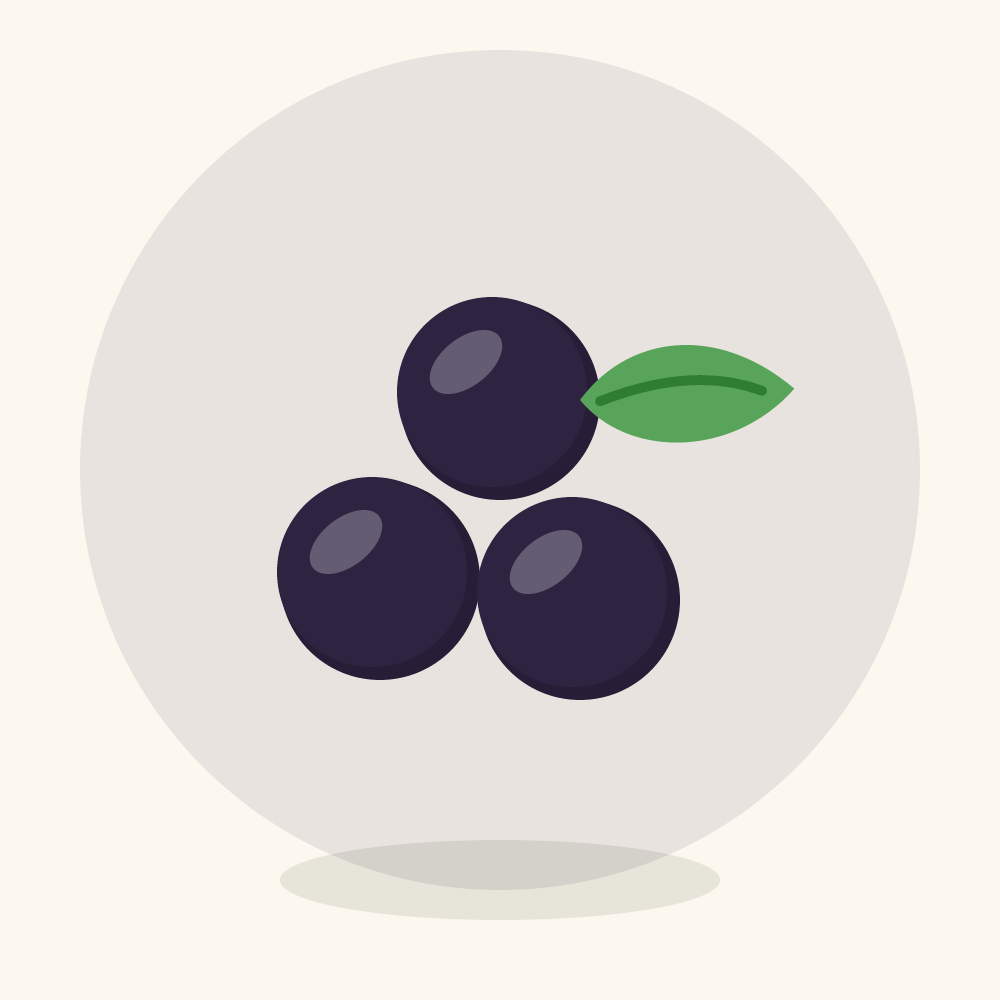
A dark blue-purple berry of the Pacific Northwest understory — mild, sweet, and slightly spicy, a staple food of the coastal First Nations who dried it into cakes. The plant's glossy leaves are also the florist trade's favorite greenery.
At a glance
- Taste
- Mild, sweet, and a little musky-spicy, with soft dark flesh and a faintly mealy texture; less bright than a blueberry but pleasant, and excellent cooked into jam and combined with tart berries.
- Origin
- The Pacific coast of North America
- Grown in
- United States, Canada
- Peak season
- Summer, Autumn
Sensory & practical profile
Taste fingerprint
- Sweetness
- Tartness
- Aroma
- Juiciness
- Firmness
Approximate, at peak ripeness · 0–5
- Ripe when
- Fully dark blue-purple, plump, and soft from mid-summer; underripe berries are firm and bland.
- How to eat
- Eat fresh by the handful, dry them into cakes, or cook into jam — often blended with tarter berries to balance the mild sweetness.
- Typical price
- Budget
Salal leads a double life: its berries were one of the most important traditional foods of the Pacific coast First Nations, while its glossy evergreen leaves — sold as "lemon leaf" — are a mainstay of the global cut-flower industry, harvested by the tonne.
When it's in season, by region
| Region | Peak months |
|---|---|
| North America | Jul–Sep along the Pacific coast |
How to select & store
Picking a ripe one
Foraged from shady understory shrubs — choose fully dark blue-purple, plump, soft berries; they ripen from mid-summer. The berries and their stems can be a little hairy, which is normal.
Storing it
A few days refrigerated; they dry and freeze very well. Coastal First Nations traditionally dried them into storable cakes, and they make excellent jam.
Practical uses
🍽️ Culinary
- Eaten fresh, or dried into cakes for winter (a traditional First Nations staple)
- Jam, jelly, and syrup, often blended with tart berries like Oregon grape
- Added to pies, sauces, and drinks
- A natural sweetener and thickener for other berries
🌿 Health & traditional
- Leaves used in Pacific Northwest Indigenous medicine, including as an appetite suppressant
🎎 Cultural
- One of the most important traditional plant foods of the Pacific coast First Nations
- Its glossy evergreen leaves are harvested by the tonne as "lemon leaf" for the global florist trade
Eating salal: what to know
What regular consumption looks like
Salal is a nutritious everyday fruit, best enjoyed as part of a varied diet. It is a good source of fibre (about 3.5 g per 100 g), which supports digestion and satiety. Its pigments and polyphenols are antioxidants that population studies associate with heart health, though that reflects overall diet rather than any single fruit.
Sensible amounts
A typical fruit serving is roughly a handful, one medium fruit, or about 80 g, and two or more varied fruit servings a day is a sensible everyday pattern.
Evidence & conditions
As a whole fruit, Salal contributes fibre, vitamins, and beneficial plant compounds, but it has not been shown to treat or prevent any specific condition — so it is best enjoyed as part of a healthy diet rather than as a remedy.
Salal: frequently asked questions
What does salal taste like?
Mild, sweet, and a little musky-spicy, with soft dark flesh and a faintly mealy texture; less bright than a blueberry but pleasant, and excellent cooked into jam and combined with tart berries.
When is salal in season?
Salal is typically in season North America (Jul–Sep along the Pacific coast). Peak months shift between the northern and southern hemispheres.
How do you eat salal?
Eat fresh by the handful, dry them into cakes, or cook into jam — often blended with tarter berries to balance the mild sweetness.
How do you know when salal is ripe?
Fully dark blue-purple, plump, and soft from mid-summer; underripe berries are firm and bland.
Is salal good for you?
Salal is a nutritious everyday fruit, best enjoyed as part of a varied diet. It is a good source of fibre (about 3.5 g per 100 g), which supports digestion and satiety. Its pigments and polyphenols are antioxidants that population studies associate with heart health, though that reflects overall diet rather than any single fruit.
How much salal should you eat?
A typical fruit serving is roughly a handful, one medium fruit, or about 80 g, and two or more varied fruit servings a day is a sensible everyday pattern.
In the shady understory of the Pacific Northwest rainforest, salal carpets the ground with glossy evergreen leaves and dark blue-purple berries. Mild, sweet, and faintly spicy, those berries were one of the most important traditional foods of the coastal First Nations, who ate them fresh and dried them into storable cakes for winter.
A staple berry and a florist’s favorite
Salal’s flavor is gentler than a blueberry — soft, sweet, a little musky — which makes it a fine base to blend with tarter berries into jam, jelly, syrup, and pies, and a natural sweetener and thickener for them. It dries and stores exceptionally well, which is exactly why it was such a valuable traditional carbohydrate along the coast. The plant has a surprising second career, too: its durable, glossy leaves are harvested by the tonne as “lemon leaf,” a mainstay of the global cut-flower and florist trade — quite possibly tucked into a bouquet in your own home. A humble, generous understory berry with deep cultural roots and an unexpected commercial life. For its Pacific-mountain neighbor, see the huckleberry.
If you like salal, try these



In season with salal

.jpg?width=800)
.jpg?width=800)
%20plum%20-%20Flickr%20-%20Matt%20Lavin.jpg?width=800)