Saguaro fruit
Carnegiea gigantea · Cactaceae · also known as Saguaro, Saguaro cactus fruit
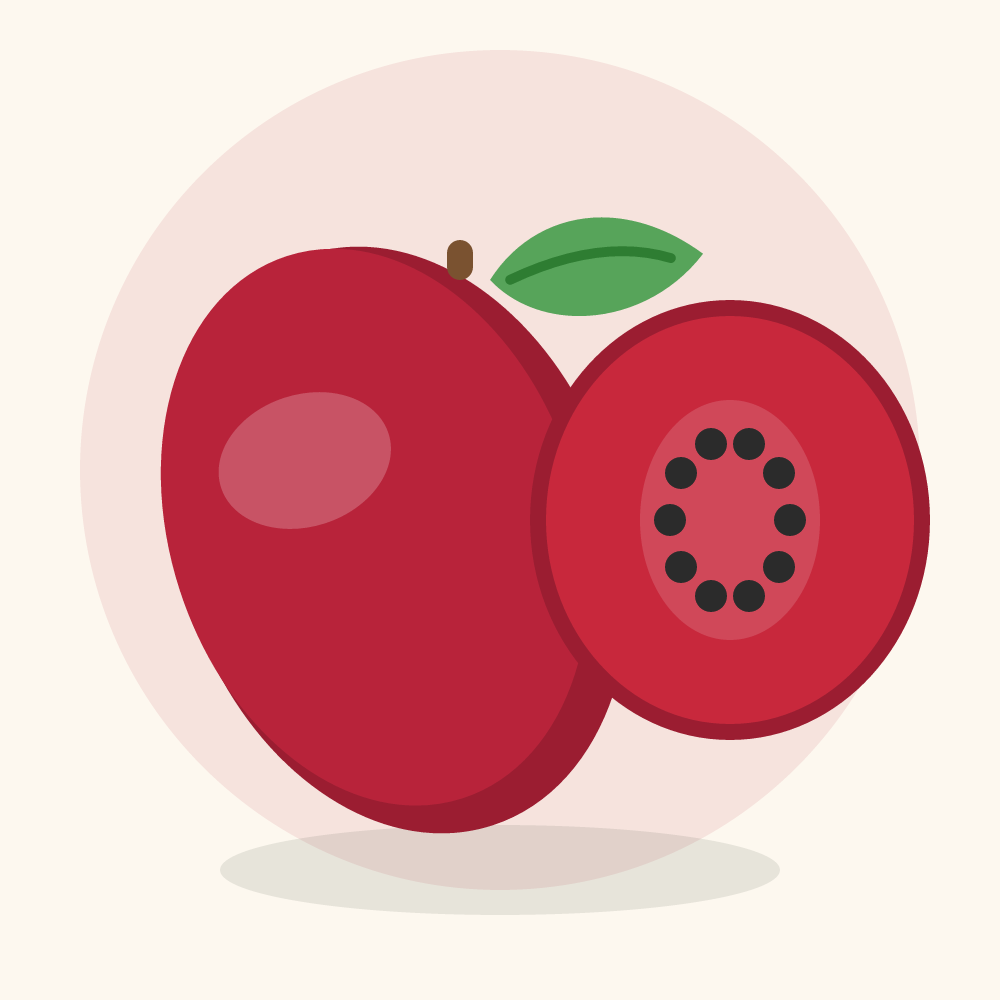
The fruit of the giant saguaro cactus of the Sonoran Desert, borne on the crowns of the arms in early summer. Its red pulp, packed with tiny black seeds, is harvested with long poles by the Tohono O'odham and boiled into syrup, jam and a ceremonial wine.
At a glance
- Taste
- Sweet, soft red pulp studded with thousands of tiny black seeds, which give it a crunch. It is mostly eaten cooked down, as syrup or jam, rather than fresh by the handful.
- Origin
- The Sonoran Desert of southern Arizona, a corner of south-eastern California and north-western Mexico
- Grown in
- United States, Mexico
- Peak season
- Summer
Sensory & practical profile
Taste fingerprint
- Sweetness
- Tartness
- Aroma
- Juiciness
- Firmness
Approximate, at peak ripeness · 0–5
- Ripe when
- The husk splits open on the cactus to show the red pulp, from the second half of June into July.
- How to eat
- Knock the ripe fruit down with a long pole, scoop the red pulp out of the split husk and eat it seeds and all, or boil it down and strain it for syrup.
The harvest pole, the kuipaD, is made from two or three dead saguaro ribs lashed together. At 15 to 30 feet long, with a cross-piece at the tip, it hooks or nudges down fruit from the very top of the cactus.
When it's in season, by region
| Region | Peak months |
|---|---|
| North America | Late Jun–Jul (Sonoran Desert, Arizona) |
How to select & store
Picking a ripe one
The fruit is picked from the wild, not bought. It is ripe when the green-to-red husk has split open on the cactus to show the red pulp inside. Gathering on protected land needs permission. In Saguaro National Park the harvest is a traditional right of the Tohono O'odham.
Storing it
The fresh pulp ferments quickly in summer heat, so it is boiled into syrup the same day or dried. The syrup and dried pulp keep far longer than the raw fruit.
Practical uses
🍽️ Culinary
- Boiled and strained into a dark syrup — roughly 20 to 30 pounds of fruit for a gallon
- Jam made by adding dried pulp to boiling syrup
- Seeds ground into a protein-rich meal, or made into candy
- Eaten fresh from the split fruit
🎎 Cultural
- The saguaro wine ceremony marks the Tohono O'odham New Year and calls the summer monsoon rains
- The first month of the O'odham calendar, Hashañi Mashad, is the saguaro harvest month
- The saguaro's white blossom is Arizona's state flower
Eating saguaro fruit: what to know
What regular consumption looks like
Saguaro fruit is mostly water with natural sugars, a little fibre, and assorted micronutrients — a hydrating everyday addition to your overall fruit intake rather than a standout for any one nutrient.
Sensible amounts
A typical fruit serving is roughly a handful, one medium fruit, or about 80 g, and two or more varied fruit servings a day is a sensible everyday pattern.
Evidence & conditions
As a whole fruit, Saguaro fruit contributes fibre, vitamins, and beneficial plant compounds, but it has not been shown to treat or prevent any specific condition — so it is best enjoyed as part of a healthy diet rather than as a remedy.
Saguaro fruit: frequently asked questions
What does saguaro fruit taste like?
Sweet, soft red pulp studded with thousands of tiny black seeds, which give it a crunch. It is mostly eaten cooked down, as syrup or jam, rather than fresh by the handful.
When is saguaro fruit in season?
Saguaro fruit is typically in season North America (Late Jun–Jul (Sonoran Desert, Arizona)). Peak months shift between the northern and southern hemispheres.
How do you eat saguaro fruit?
Knock the ripe fruit down with a long pole, scoop the red pulp out of the split husk and eat it seeds and all, or boil it down and strain it for syrup.
How do you know when saguaro fruit is ripe?
The husk splits open on the cactus to show the red pulp, from the second half of June into July.
Is saguaro fruit good for you?
Saguaro fruit is mostly water with natural sugars, a little fibre, and assorted micronutrients — a hydrating everyday addition to your overall fruit intake rather than a standout for any one nutrient.
How much saguaro fruit should you eat?
A typical fruit serving is roughly a handful, one medium fruit, or about 80 g, and two or more varied fruit servings a day is a sensible everyday pattern.
The saguaro is the tall, arm-raising cactus of the Sonoran Desert, which covers most of southern Arizona, a small part of California and part of Mexico around the Gulf of California. A saguaro has to be about 35 years old before it flowers. Its white blossoms open at night from late April to early June, peaking at the end of May. Each flower leaves a fruit at the tip of an arm or on the crown.
When saguaro fruit ripens
The fruit ripens in early to mid summer. Organ Pipe Cactus National Monument puts it in July, and the National Park Service’s harvest brief for Saguaro National Park describes fresh syrup being made in the second half of June. A ripe fruit splits open on the cactus to show red pulp holding about 2,000 tiny black seeds. Birds, bats and other desert animals eat it and spread the seed.
The O’odham harvest
For the Tohono O’odham the saguaro harvest begins the year: the first month of their 13-month lunar calendar, Hashañi Mashad, is the saguaro harvest month. Harvesters knock the fruit down with a kuipaD, a pole made from dead saguaro ribs. An experienced harvester can gather 12 to 20 pounds of pulp in two to three hours.
The pulp is boiled over an open fire and strained into syrup. Dried pulp added to boiling syrup makes jam, and the seeds are ground into meal. Some of the syrup becomes a ceremonial wine, drunk to bring the summer monsoon. The earliest documented use dates to 1540, when Pedro de Castañeda of the Coronado expedition recorded an O’odham group’s wine ceremony.
Relatives
Saguaro fruit is a cactus fruit like the prickly pear and dragon fruit. Unlike those two, it is a wild-gathered fruit. In Saguaro National Park, park rules were amended to allow the traditional O’odham harvest to continue.
If you like saguaro fruit, try these


In season with saguaro fruit


