Chupa-chupa
Matisia cordata · Malvaceae · also known as South American sapote, Sapote, Zapote de monte, Chupachupa
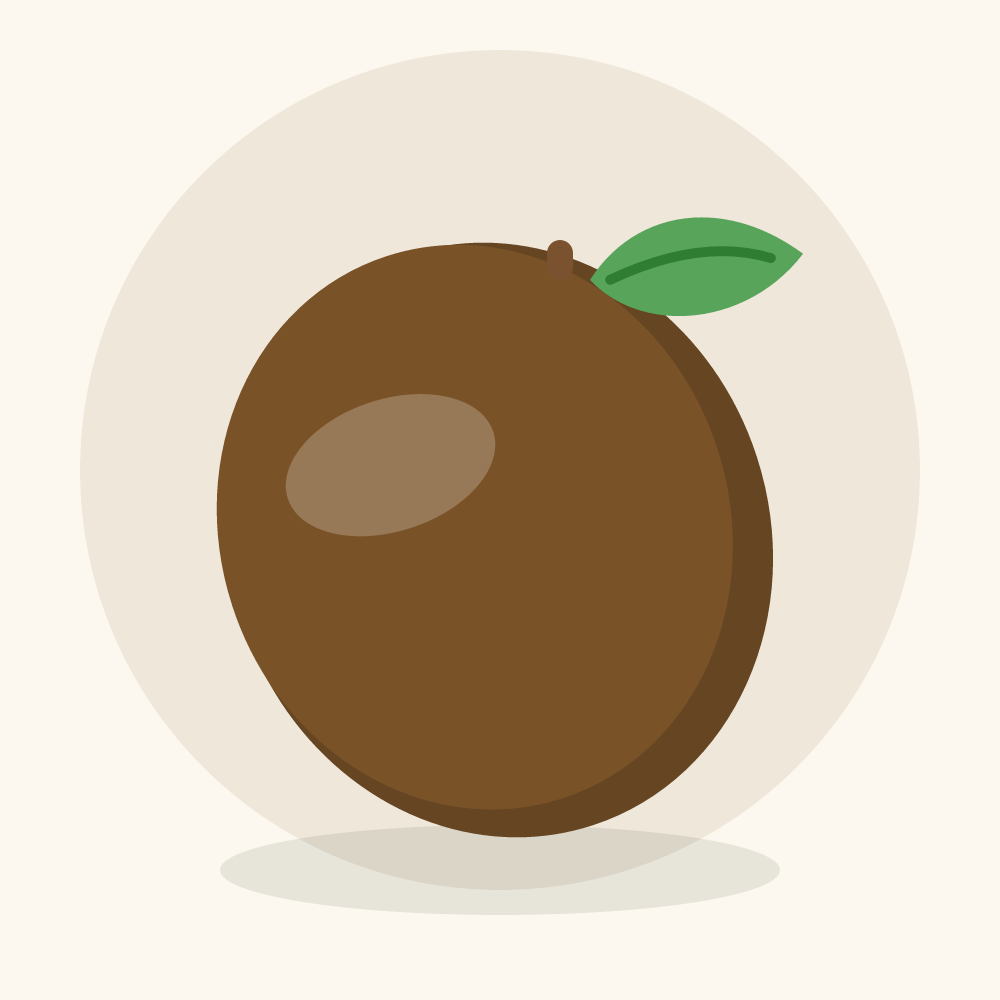
A large Amazonian fruit in the cacao family whose brown-green rind peels to reveal sweet, fibrous, deep-orange flesh you suck off the seeds — a pumpkin-and-apricot flavor sold along the rivers of Colombia, Peru, and Ecuador.
At a glance
- Taste
- Sweet, mild, and juicy with soft fibrous orange pulp clinging to a few large seeds; the flavor recalls pumpkin, apricot, and mango, sucked from the seeds rather than sliced.
- Origin
- The western Amazon and Andean foothills
- Grown in
- Colombia, Peru, Ecuador, Brazil
- Peak season
- Summer, Autumn
Sensory & practical profile
Taste fingerprint
- Sweetness
- Tartness
- Aroma
- Juiciness
- Firmness
Approximate, at peak ripeness · 0–5
- Ripe when
- The thick brown-green rind softens and smells sweet, peeling back easily to reveal deep-orange fibrous pulp.
- How to eat
- Peel the thick rind and suck the sweet orange pulp off the large seeds, or blend it into a licuado — hence the name "suck-suck."
- Typical price
- Budget
Its name, chupa-chupa ("suck-suck"), describes exactly how it is eaten — the fibrous orange pulp is sucked straight off the seeds, a favorite riverside snack across the western Amazon.
When it's in season, by region
| Region | Peak months |
|---|---|
| Latin America | Mainly the wet season; varies across the western Amazon |
How to select & store
Picking a ripe one
Choose fruit whose thick brown-green rind gives slightly and smells sweet; ripe fruit peels easily to reveal deep-orange pulp. Hard fruit ripens over a few days.
Storing it
A few days once ripe — perishable. Eaten fresh soon after peeling, or the pulp blended into drinks.
Practical uses
🍽️ Culinary
- The sweet orange pulp sucked fresh off the seeds — the usual way
- Blended into juices, licuados, and ice cream
- Made into simple sweets and preserves
🌿 Health & traditional
- Minor local folk uses; grown mainly for the fresh fruit
🎎 Cultural
- A popular riverside market fruit across the western Amazon (chupa-chupa means "suck-suck")
- A cacao-family cousin, related to the trees that give cocoa and cupuaçu
Eating chupa-chupa: what to know
What regular consumption looks like
Chupa-chupa is a nutritious everyday fruit, best enjoyed as part of a varied diet. Its pigments and polyphenols are antioxidants that population studies associate with heart health, though that reflects overall diet rather than any single fruit.
Sensible amounts
A typical fruit serving is roughly a handful, one medium fruit, or about 80 g, and two or more varied fruit servings a day is a sensible everyday pattern.
Evidence & conditions
As a whole fruit, Chupa-chupa contributes fibre, vitamins, and beneficial plant compounds, but it has not been shown to treat or prevent any specific condition — so it is best enjoyed as part of a healthy diet rather than as a remedy.
Chupa-chupa: frequently asked questions
What does chupa-chupa taste like?
Sweet, mild, and juicy with soft fibrous orange pulp clinging to a few large seeds; the flavor recalls pumpkin, apricot, and mango, sucked from the seeds rather than sliced.
When is chupa-chupa in season?
Chupa-chupa is typically in season Latin America (Mainly the wet season; varies across the western Amazon). Peak months shift between the northern and southern hemispheres.
How do you eat chupa-chupa?
Peel the thick rind and suck the sweet orange pulp off the large seeds, or blend it into a licuado — hence the name "suck-suck."
How do you know when chupa-chupa is ripe?
The thick brown-green rind softens and smells sweet, peeling back easily to reveal deep-orange fibrous pulp.
Is chupa-chupa good for you?
Chupa-chupa is a nutritious everyday fruit, best enjoyed as part of a varied diet. Its pigments and polyphenols are antioxidants that population studies associate with heart health, though that reflects overall diet rather than any single fruit.
How much chupa-chupa should you eat?
A typical fruit serving is roughly a handful, one medium fruit, or about 80 g, and two or more varied fruit servings a day is a sensible everyday pattern.
Along the rivers of the western Amazon, the chupa-chupa is a market favorite whose very name — “suck-suck” — tells you how to eat it. A large fruit with a thick brown-green rind, it peels open to reveal sweet, fibrous, deep-orange pulp that you suck straight off the large seeds, tasting of pumpkin, apricot, and mango.
A cacao cousin from the riverbanks
Despite its “South American sapote” nickname, the chupa-chupa isn’t a true sapote at all — it belongs to the Malvaceae, the same family as cacao and cupuaçu, making it a cousin of the trees behind chocolate. The soft orange pulp is eaten fresh by the riverside, sucked from the seeds, or blended into juices, licuados, and ice cream. Perishable and best enjoyed close to where it grows, it’s a staple of Colombian, Peruvian, and Ecuadorian river markets, sold in heaps by boat vendors. Sweet, mild, and generous, it fills the same orange-fleshed niche as the mamey sapote and golden lucuma — an Amazonian treat you eat with your hands and no ceremony at all.
If you like chupa-chupa, try these

.jpg?width=800)
In season with chupa-chupa
.jpg?width=800)