How to eat cambuci
How to eat cambuci, what it tastes like, and how to tell when it's ripe — a practical guide with Cambuci's flavour, prep, and storage.
How do you eat cambuci? Don't eat it plain — blend the aromatic pulp with sugar into juice, sorbet, mousse, and caipirinha, where its perfume is extraordinary.
What does it taste like? Fiercely sour and powerfully aromatic, with a green, resinous, floral perfume; too acidic to eat fresh for most, it becomes spectacular when sweetened into juice, sorbet, and cocktails.
How to prepare & eat cambuci
Don't eat it plain — blend the aromatic pulp with sugar into juice, sorbet, mousse, and caipirinha, where its perfume is extraordinary.
Ways to eat & use it
- Juices, sorbets, and mousses (sweetened to balance the sourness)
- Cambuci caipirinhas and cocktails — a São Paulo specialty
- Jams, jellies, and sauces
- A fragrant souring agent
What does cambuci taste like?
Fiercely sour and powerfully aromatic, with a green, resinous, floral perfume; too acidic to eat fresh for most, it becomes spectacular when sweetened into juice, sorbet, and cocktails.
Sensory & practical profile
Taste fingerprint
- Sweetness
- Tartness
- Aroma
- Juiciness
- Firmness
Approximate, at peak ripeness · 0–5
- Ripe when
- Fully green-to-yellow-green and fragrant with a slight give — but even ripe it's too sour for most to eat raw.
- How to eat
- Don't eat it plain — blend the aromatic pulp with sugar into juice, sorbet, mousse, and caipirinha, where its perfume is extraordinary.
- Typical price
- Everyday
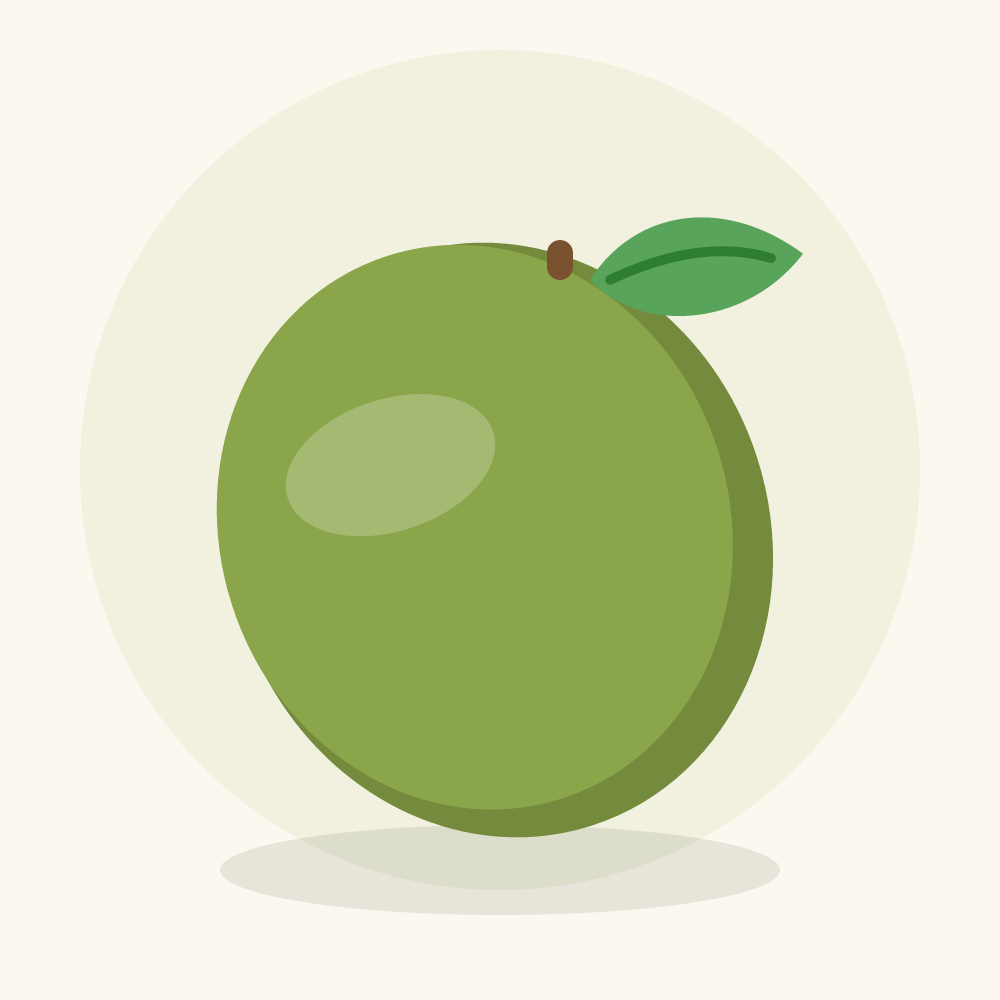
The cambuci is shaped like a little flying saucer, and it's so tied to São Paulo that a city district, a mountain range, and a whole agritourism "Cambuci route" of growers all carry its name — part of a movement to save the Atlantic-forest fruit.
When it's in season, by region
| Region | Peak months |
|---|---|
| Latin America | Jan–Apr (São Paulo's Atlantic forest) |
How to tell when cambuci is ripe
Fully green-to-yellow-green and fragrant with a slight give — but even ripe it's too sour for most to eat raw.
How to store cambuci
Only a day or two once ripe — very perishable. Usually pulped and frozen at once, the main way it's stored and sold.
Cambuci: frequently asked questions
What does cambuci taste like?
Fiercely sour and powerfully aromatic, with a green, resinous, floral perfume; too acidic to eat fresh for most, it becomes spectacular when sweetened into juice, sorbet, and cocktails.
When is cambuci in season?
Cambuci is typically in season Latin America (Jan–Apr (São Paulo's Atlantic forest)). Peak months shift between the northern and southern hemispheres.
How do you eat cambuci?
Don't eat it plain — blend the aromatic pulp with sugar into juice, sorbet, mousse, and caipirinha, where its perfume is extraordinary.
How do you know when cambuci is ripe?
Fully green-to-yellow-green and fragrant with a slight give — but even ripe it's too sour for most to eat raw.
Is cambuci good for you?
Cambuci is a nutritious everyday fruit, best enjoyed as part of a varied diet. It is a good source of fibre (about 3 g per 100 g), which supports digestion and satiety. It is a good source of vitamin C (about 40 mg per 100 g), supporting immune function and helping the body absorb iron from plant foods. Its pigments and polyphenols are antioxidants that population studies associate with heart health, though that reflects overall diet rather than any single fruit.
How much cambuci should you eat?
A typical fruit serving is roughly a handful, one medium fruit, or about 80 g, and two or more varied fruit servings a day is a sensible everyday pattern.